


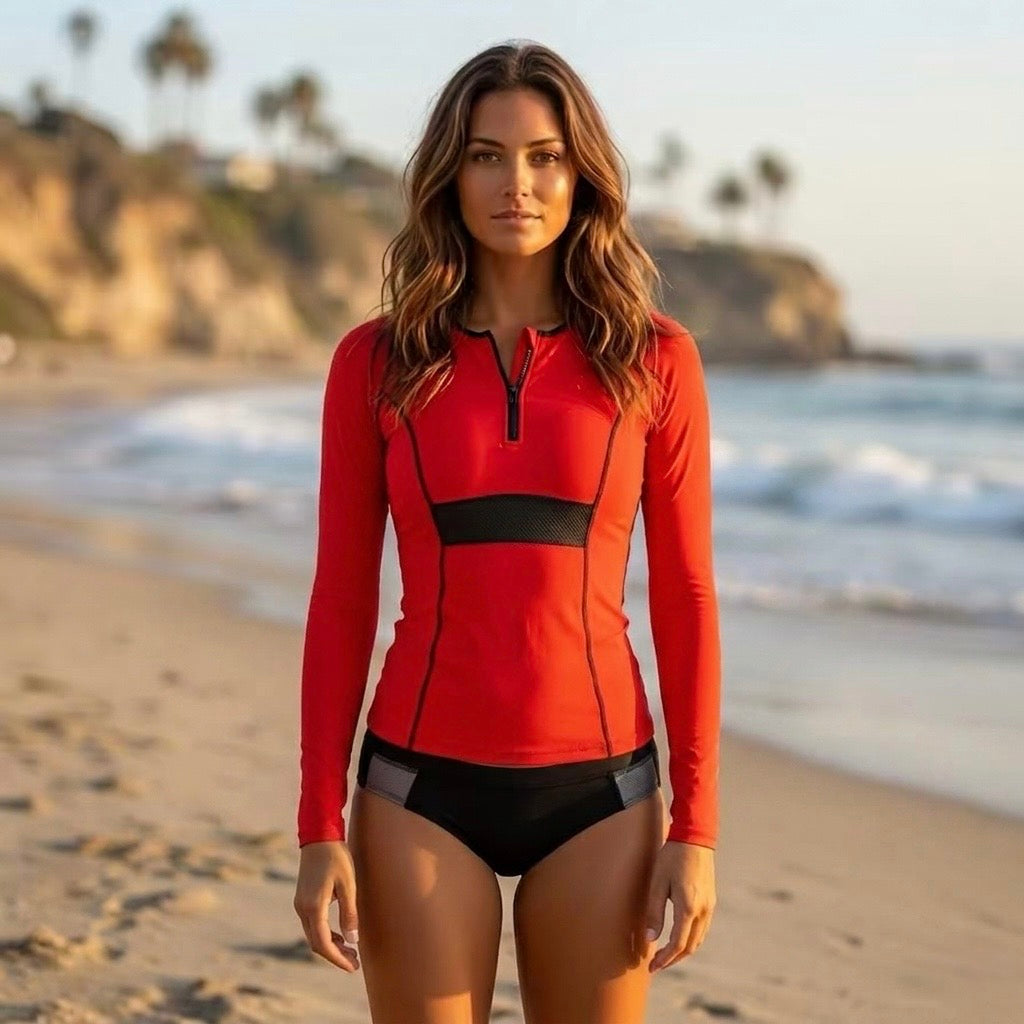
Lycra vs Spandex: Why SportPort Chooses LYCRA® for Premium Fit, Durability & Comfort
If you’ve ever wondered why some activewear hugs in all the right places and still bounces back after a year of wear, the secret is often in the elastane yarn. “Spandex,” “elastane,” and “Lycra” are used like synonyms—but not all elastane is created equal.
For active women who want performance, confidence, and garments that last, here’s a clear, friendly guide to what makes LYCRA® different, how it’s made, and why SportPort only uses premium Lycra blends in our highest‑quality pieces.
What is Lycra (and how that name differs from spandex/elastane)
Technically: elastane (the chemical name) and spandex (the common North American term) describe the same class of highly elastic synthetic fibers.
LYCRA® is a global brand name owned by The LYCRA Company/INVISTA for specially made elastane fibers and related branded solutions.
In practice, “Lycra” signals a branded, quality‑controlled range of elastane products with specific performance and processing standards.

How Lycra is made — a simplified, practical explanation
Elastane fibers are produced from segmented polyurethanes formed by reacting diisocyanates with long‑chain diols, resulting in long polymer chains with alternating “soft” and “hard” segments that give the fiber its stretch and recovery. The spinning process begins with dissolving the polymer into a solvent (solution/spin) or melting it, then extruding the polymer through a spinneret to form fine filaments.
Those freshly extruded filaments are coagulated or cooled, then undergo controlled drawing (mechanical stretching) and heat‑setting to align polymer chains, increase tensile strength, and lock in elastic memory. Solvent removal, washing, and finishing treatments follow — finishes can include lubricants, antistatic agents, UV stabilizers, or specialty coatings that improve abrasion resistance and hand.
Key variables (spinneret hole size, draw ratio, temperature profiles, post‑spin annealing, and finishing chemistry) determine filament uniformity, denier consistency, and long‑term fatigue resistance.
At the brand level, proprietary polymer recipes, chlorine‑resistant comonomers, stabilizers, and stricter process controls — plus rigorous batch testing for elongation, recovery, and repeated‑cycle fatigue — are what make premium LYCRA® yarns more durable and better able to resist heat, chlorine, UV and mechanical wear than many generic spandex fibers.

Why branded LYCRA® often outperforms generic spandex
Consistent polymer chemistry: LYCRA® fibers are manufactured to strict specifications so blended fabrics behave predictably (fit retention, recovery, and hand).
Advanced formulations: The LYCRA Company offers a portfolio (including specialty yarns) designed for chlorine resistance, high‑temperature dyeing, and engineered comfort.
Quality control & testing: Branded fibers typically undergo rigorous lab testing for tensile strength, elongation recovery, and long‑term fatigue — metrics that translate to garments that hold shape through millions of stretch cycles. Industry overviews and brand materials highlight these advantages.

What “more durable” actually means for you
Durability isn’t just “lasts longer” — it means sustained, reliable performance every time you wear it. With higher‑quality elastane you’ll see less sagging at the knees and seat, firmer, more consistent compression through leggings and bras, waistbands that hold their shape, and fewer stretched‑out sleeves or dropped hems.
Higher‑quality elastane fibers retain their original fit, bounce back after movement, and keep color and opacity wash after wash, so you don’t get the thin, baggy look that cheap stretch often develops.
Technically, premium fibers resist microscopic breakage and chemical degradation (from sweat, detergent, chlorine, and heat), so the garment’s elasticity and support remain intact through hundreds — even thousands — of wear/wash cycles.
For busy women who wear, wash, and move in their pieces every day, that translates to clothing that looks better, feels more supportive, and keeps you confident far longer.

Real‑world performance: Lycra in high‑end textiles
LYCRA® is widely used in premium denim, swimwear, and performance apparel because brands and mills pair Lycra variants with specific yarns and constructions to meet performance goals (e.g., softer hand, recovery, or chlorine resistance).
That’s why you’ll see LYCRA® called out on premium labels — it’s both a material choice and a quality signal to consumers and manufacturers.

Why SportPort uses only top‑quality Lycra blends
At SportPort we design for movement, confidence, and longevity. That means:
-
Fit that flatters over time: Lycra’s superior recovery keeps silhouettes smooth so your favorite pieces look and feel newer, longer.
-
Performance through sweat and sun: specialist Lycra formulations can withstand repeated workouts, chlorine, and heat exposure better than many unbranded elastanes.
-
Sustainable longevity: a longer‑lasting garment reduces replacement frequency — better for your wardrobe and the planet.
-
We test blends in real‑world conditions and choose fabric partners whose LYCRA®‑based yarns meet our durability, colorfastness, and comfort standards. (See our product pages for fabric specs and care tips.)

What to look for when shopping: how to tell the good from the simply “stretchy”
-
Branding & labels: LYCRA® or another reputable elastane brand listed on the label is a strong indicator of premium fiber.
-
Fabric content ratios: higher‑quality activewear typically uses modest elastane percentages (3–15%) blended with nylon or polyester for support and recovery; extremes can feel flimsy.
-
Independent tests & certifications: product pages that cite lab tests (pilling, tensile, chlorine resistance) show the brand is serious about longevity.
-
Construction matters: stitch, waistband design, and lamination affect fit as much as fiber choice — premium Lycra blends won’t fix poor construction, but they amplify good design.
Expert voices (short reads)
The LYCRA Company / INVISTA — official product descriptions and branded technology details.
Industry technical primers (university/textile school materials) explain elastane chemistry and spinning processes in plain language.
Textile associations’ fact sheets summarize practical fiber properties and care guidance.
SportPort Active: leaders in fabric technology and Lycra fabrics.
Care tips: get the most from your Lycra‑blend pieces
-
Cool wash, gentle cycle; avoid high heat drying.
-
Rinse chlorine swimsuits promptly; use specialized swim detergent.
-
Avoid fabric softeners and bleach; they break down elastane fibers.
-
Rotate garments to reduce repeated stress on the same piece.
Following these simple steps preserves elasticity and fit for months (or years) longer.
Lycra isn’t just a fancy name for stretch — it’s a performance promise backed by controlled chemistry, specialized manufacturing, and testing.
For women who want form, function, and longevity in their activewear, that premium choice matters. That’s why SportPort uses Lycra‑based blends in our best pieces: to give you dependable fit, confidence, and clothes that keep up with your life.
Choose Lycra—because your activewear should earn its place in your wardrobe, not retire after a few washes.
Sources and further reading
Spandex (elastane) — Wikipedia (overview of fiber, brand names).
The LYCRA Company / INVISTA — brand and product information.
MIT OCW — course material: chemistry of sports fabrics (explains elastane
Technical overview — elastane production and polymer chemistry.
SportPort Active – The Gold Standard in Fabric Innovation
Read more
SportPort’s integrates a patented, lab‑certified EMF‑protective pocket into select garments (including the Apex sports bra) designed to create a barrier between your phone and your body while keepi...
Cool, quick, and endlessly customizable, smoothies are one of the easiest ways to get more nutrients into busy days. Packed with fruit, veggies, protein, and healthy fats, a well‑balanced smoothie ...