


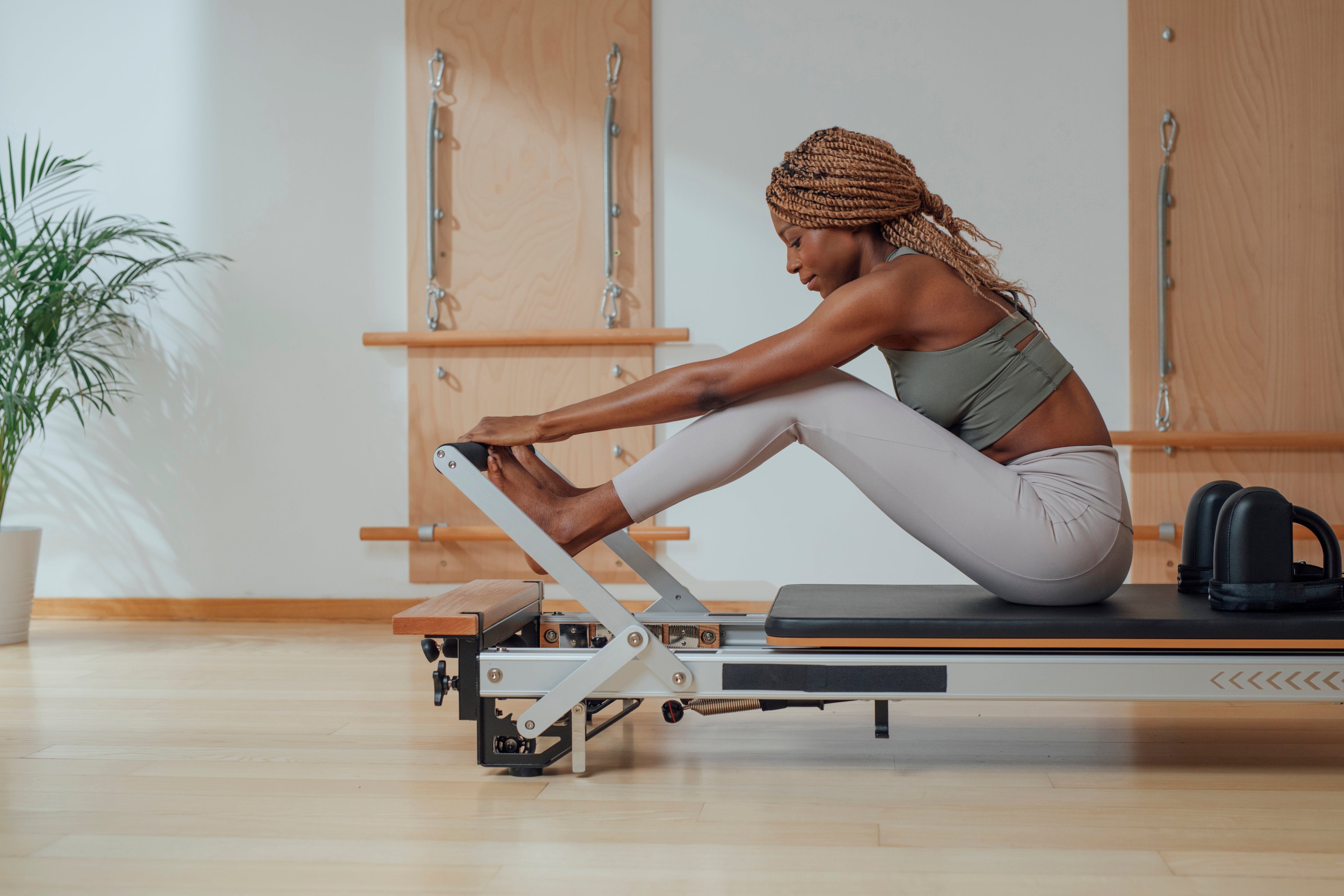
Pilates at Home in 2026: The Low-Impact Power Workout Every Busy Woman Can Actually Stick To
If your days look like carpool–Zoom–laundry–repeat and your body feels a little… compressed, Pilates at home might be your new best friend.
Pilates has quietly gone from “dancer niche” to one of the fastest-growing workout formats in the world:
-
A Sports & Fitness Industry Association report found Pilates is the fastest-growing exercise modality over the past five years.
-
ClassPass data shared with Axios show Pilates has topped U.S. fitness class bookings since 2023, with a 66% jump in reservations from 2024 to 2025.
-
ACE (American Council on Exercise) calls Pilates’ resurgence “remarkable,” with demand exploding both in studios and on virtual platforms.
And here’s the best part for you: you don’t actually need a reformer, studio, or special membership to benefit from Pilates.
Mat-based Pilates—done right in your living room—is:
-
Low-impact and joint friendly
-
Core-focused (hello, back support and better posture)
-
Easy to scale from 10 minutes to a full workout
Let’s walk through why Pilates is such a great at-home option in 2026, how to get started safely, and a simple 15-minute mat routine you can do in your SportPort Active set.

What Is Pilates (and Why Do Experts Love It)?
Pilates was developed by German trainer Joseph H. Pilates in the early 20th century. Harvard Health describes it as a system of exercises designed to improve balance, flexibility, and strength, especially in your core—the muscles of your back, sides, pelvis, and buttocks that stabilize your center.
👉 Harvard overview: A major review from the Journal of Strength and Conditioning Research notes that Pilates uses around 50 simple, repetitive exercises to build muscle strength/endurance, flexibility, posture, and balance, and can be gentle or quite challenging depending on how it’s programmed.
Other expert highlights:
-
Harvard Health: Pilates is a good workout at any age, helping improve flexibility, balance, core strength, and posture.
-
Hospital for Special Surgery (HSS): Deep core engagement in Pilates can support the spine, improve posture, and reduce injury risk in daily life.
-
A 2025 systematic review found Pilates may also reduce anxiety, depression, and stress alongside physical benefits.

So when you do Pilates at home, you’re not just “stretching”—you’re training:
-
A stronger, more supportive core
-
Better spine health and posture
-
More body awareness and control
-
A calmer, more regulated nervous system
Why Pilates at Home Makes So Much Sense in 2026
Between kids, work, and social calendars, consistency often matters more than perfection. That’s exactly where at-home Pilates shines:
1. It’s Equipment-Light
Most foundational exercises can be done with:
-
A mat or soft rug
-
Maybe a small pillow or rolled towel
As Ace puts it, Pilates is a low-impact method that builds strength and mobility with bodyweight and simple props, making it easy to adapt to home
2. It’s Short-Workout Friendly
Pilates is ideal for 10–20 minute sessions, which match what search and trend reports show women actually want: quick, focused, low-impact workouts they can plug into busy days.
3. It’s Joint-Kind but Muscularly Serious
Harvard and spine-care specialists emphasize that Pilates’ controlled, low-impact movements help support back, hip, and knee health, making it a great option if high-impact workouts don’t love your joints.
4. It Plays Well With Other Goals
Whether you’re into:
-
Running or walking
-
Strength training
-
Yoga
-
“Hot girl walks” in your neighborhood
…Pilates makes everything feel better by cleaning up posture, alignment, and core control.

Setting Up Your At-Home Pilates Space
You don’t need a Pinterest-perfect studio—just a reliable spot you can keep coming back to.
1. Choose Your Corner
Look for:
-
Enough floor space to lie down and stretch arms overhead
-
A surface you can cushion (hard floors are fine with a mat)
-
A wall nearby if you like support for balance work
2. Gear Checklist
-
Mat: A thicker Pilates or yoga mat (6–8 mm) is ideal for spine comfort.
-
Clothing: Fitted but comfortable activewear that stays put when you roll and twist.
-
This is where your SportPort Active leggings and tops shine—no sliding waistbands, no see-through surprises, no scratchy seams.
-
Optional props:
-
Small cushion or folded towel (for under your head or hips)
-
Light resistance band or Pilates ring (later, when you’re ready to level up)
3. Safety Basics
-
Move slowly and with control—Pilates is about quality over speed.
-
If you have back, neck, or joint issues, check with a doctor or physical therapist first and modify as needed.
-
Skip any exercise that causes sharp pain; Pilates should feel like effortful support, not strain.

A 15-Minute Beginner-Friendly Pilates at Home Routine
Inspired by exercises recommended by Pilates-trained physios and celebrity trainers (like Yasmin Karachiwala’s no-gym-needed core moves for posture and strength ), here’s a simple sequence to try 2–3 times per week.
Tip: Play soft music, put on your SportPort Active set, and think of this as “spine and core maintenance” time—like brushing your teeth, but for your posture.
1. Breathing & Imprint (2 minutes)
Why: Wake up your deep core and connect breath with movement.
How:
-
Place one hand on your ribcage, one on your lower belly.
-
Inhale through your nose, feeling ribs expand sideways.
-
Exhale slowly through your mouth as you gently draw your belly toward your spine and imprint your low back softly into the mat
-
.Lie on your back, knees bent, feet hip-width apart.
Repeat for 8–10 breaths.
2. Pelvic Curl / Bridge (2 minutes)
Why: Strengthens glutes and hamstrings, mobilizes the spine, supports back health.
How:
-
From the same lying position, arms by your sides:
-
Inhale to prepare.
-
Exhale, gently tuck your pelvis and slowly peel your spine off the mat one vertebra at a time until you’re in a bridge.
-
Inhale at the top.
-
Exhale, roll back down slowly.
Do 8–10 reps.
3. Single-Leg Marches / Toe Taps (2–3 minutes)
Why: Teaches your core to stabilize while your legs move—key for walking, running, and daily activities.
How:
-
Lie on your back, knees bent.
-
Bring one leg at a time into tabletop (knees over hips, shins parallel to floor).
-
Engage your core (no arching!) and slowly lower one foot to tap the mat, then bring it back up.
-
Alternate legs, keeping your pelvis steady.
20–30 taps total, rest as needed.
4. Single-Leg Stretch (2–3 minutes)
Why: A Pilates classic for core strength and coordination; recommended by many trainers (including Deepika Padukone’s Pilates coach).
How:
-
From tabletop, curl your head, neck, and shoulders off the mat, hands lightly on your shins.
-
Extend your right leg out at a 45° angle while hugging the left knee in.
-
Switch legs smoothly as you breathe: inhale for two switches, exhale for two switches.
Do 8–10 pairs (or more if you feel strong). Keep your low back supported—if it arches, bring your legs higher.
5. Side-Lying Leg Lifts (3 minutes)
Why: Strengthens hips and glutes, supports knee and low back health, improves lateral stability.
How:
-
Lie on your side, hips and shoulders stacked, head supported by your arm.
-
Keep your top hand on the mat in front of your chest for balance.
-
With core engaged, lift your top leg to hip height, then lower with control.
12–15 lifts per side.
Optional: Add small circles forward and backward (8 each way).
6. Cat-Cow + Child’s Pose (3 minutes)
Why: Mobilizes the spine, relieves stiffness, feels amazing after a day at a desk or in the car.
How:
-
Come to hands and knees, wrists under shoulders, knees under hips.
-
Inhale, gently arch your spine, lifting chest and tailbone (cow).
-
Exhale, round your back, tucking chin and tailbone (cat).
8–10 slow cycles.
Then shift back into child’s pose, hips toward heels, arms forward, and breathe for 3–5 deep breaths.
How Often Should You Do Pilates at Home?
-
Most experts suggest 2–3 sessions per week to see noticeable changes in:
-
Core strength
-
Flexibility
-
Balance
-
Posture and back comfort
Harvard Health and physio-led clinics emphasize that Pilates’ benefits build with regular practice over weeks and months—just like brushing your teeth, small doses add up.
You can:
-
Use it as a standalone workout on lighter days.
-
Pair it with walking or strength training as a core + mobility finisher.
-
Do a 10-minute express sequence on hectic days (even 5 minutes is better than none!).

Making At-Home Pilates a Habit (Not Just a Phase)
A few habit tricks from behavior and fitness research that actually work:
-
Same time, same place: Choose a “Pilates slot” (e.g., after school drop-off, after work, or before bed).
-
Tie it to an existing habit: “After I make coffee, I do 10 minutes of Pilates.”
-
Lay out your SportPort Active set the night before: Our brains love visual cues. If your leggings and top are ready, you’re more likely to roll out the mat.
-
Track tiny wins: Put a checkmark on a calendar for every Pilates day—watching the chain grow is surprisingly motivating.
Pilates at home doesn’t need to be fancy, complicated, or “Insta perfect.” It just needs to be consistent and kind to your body.
Find a cozy corner, roll out a mat, slip into your favorite SportPort Active pieces, and let 10–15 minutes of intentional movement become the part of your day that’s just for you—and the strong, supported spine you’re building for all the years ahead.
Move With Nicole/30 Min Pilates for Beginners
Move With Nicole/25 MIN FEEL GOOD PILATES || At-Home Pilates Workout (No Equipment)
Hourglass Shape Pilates | 20 Min Pilates at Home | Lilly Sabri
25 Min Full Body Pilates Workout/No Equipment (Sculpt & Tone)/Cortney Watts
Read more

Celebrate Valentine’s Day with healthy, high-flavor desserts. Dark chocolate, berries, chia & Greek yogurt recipes that feel decadent—without the sugar crash.
Wondering which fish has the most protein? Here’s how often to eat fish, what types to choose, and how to keep it clean, safe, and low‑mercury.