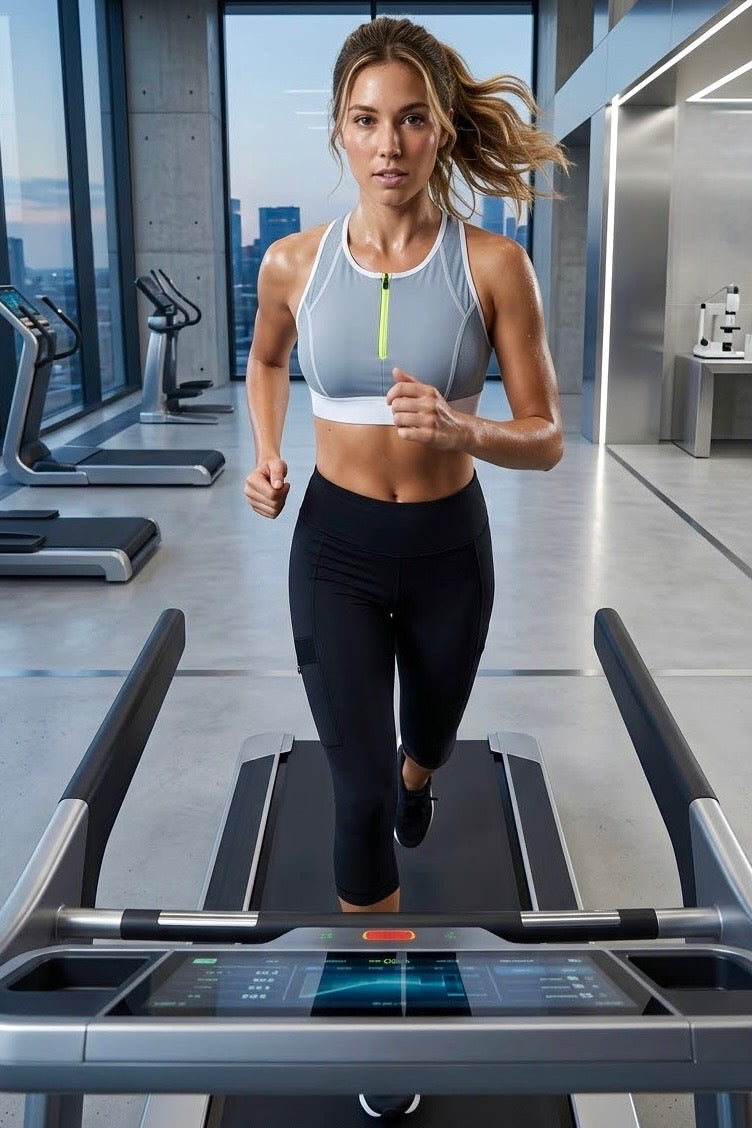
Same Speed. Same Time. Same Calories? The Indoor vs. Outdoor Cardio Test
What Really Happens When Your Winter Run Moves to the Treadmill—or Your Bike Moves Indoors
Same Workout. Different Room. Same Calories?
November arrives.
Your 6:00 a.m. run is suddenly happening in darkness.
The temperature drops.
Wind picks up.
The bike comes off the road and onto the trainer.
And one of winter fitness's most interesting questions appears:
If I run the exact same speed for the exact same amount of time on a treadmill, am I burning the same calories I would outside?
Then comes the cyclist's version:
If I ride indoors for an hour at the same “speed” I ride outdoors, does my body know the difference?
The short answer?
Sometimes close. Not necessarily identical.
And for cycling, comparing “speed” may not even be the right question.
That's because your body doesn't read the number displayed on the machine.
It responds to work.
Air resistance.
Incline.
Rolling resistance.
Temperature.
Cooling.
Terrain.
Acceleration.
Power output.
Body size.
Fitness.
Even how efficiently you move.
So this winter, we're putting indoor and outdoor cardio through what we're calling the Same Numbers Test.
Same speed.
Same time.
Different environment.
Does the math still work?
Let's find out.
Meet the Expert Behind the Numbers
To make sense of calorie expenditure, one of the most important experts to know is Dr. Barbara Ainsworth, Regents Professor Emerita at Arizona State University.
Ainsworth's research expertise includes physical-activity epidemiology, physical-activity assessment, activity in women and environmental influences on movement. Most importantly for this discussion, she is the lead author behind the Adult Compendium of Physical Activities, one of the major scientific references used to estimate the energy cost of hundreds of different activities.
The latest Adult Compendium assigns activities a MET value.
MET stands for metabolic equivalent.
Very roughly, one MET represents the energy your body uses at rest. An activity rated at 8 METs demands substantially more energy than one rated at 3 METs.
That makes METs useful for comparing activities.
But there is an important caveat.
They are estimates.
They're wonderful for understanding relative exercise demand.
They are not a personalized metabolic invoice.
Your fitness level, body mass, movement efficiency, environment and actual intensity can change the real number.
Keep that in mind, because it's about to become very relevant.
Case #1: The Treadmill vs. Running Outside

Let's start with the easiest comparison.
Suppose you run:
6 miles per hour.
For:
60 minutes.
Outside one day.
On a treadmill the next.
The 2024 Compendium lists running at approximately 6.0–6.3 mph, or about a 10-minute mile, at 9.3 METs.
Using the standard MET approximation, an hour at that intensity works out roughly like this:
| Body Weight | Estimated Energy for 60 Minutes at ~6 mph |
|---|---|
| 140 lb | ~590 calories |
| 160 lb | ~675 calories |
| 180 lb | ~760 calories |
Before anybody uses that table to plan dinner:
Those are estimates.
And here's where indoor versus outdoor becomes interesting.
Why 6 mph Outdoors Isn't Necessarily the Same as 6 mph Indoors
Outside, you move through the air.
On a motorized treadmill, you're running in relatively still air while the belt moves beneath you.
Outside you may also encounter:
Wind.
Tiny hills.
Turns.
Road camber.
Uneven pavement.
Changes in pace.
Temperature shifts.
Small accelerations and decelerations.
A treadmill can remove many of those variables.
That's why for decades runners were told to set a treadmill around 1% incline to better simulate outdoor running.
That advice came largely from a classic study that found a 1% treadmill grade approximated the energetic cost of outdoor running reasonably well at certain moderate-to-fast running speeds.
But science has moved forward.
And the famous 1% rule isn't quite as universal as we once thought.
The 1% Treadmill Rule Just Got More Interesting
A recent review examining roughly three decades of treadmill-versus-overground research concluded that a fixed 1% incline does not consistently make treadmill and outdoor running metabolically equivalent for everyone.
Speed matters.
Environmental conditions matter.
Individual biomechanics matter.
Technology matters.
The researchers argued for a more individualized interpretation rather than automatically assuming 1% always equals outdoors.
Even more interesting, a 2026 study compared overground running with treadmill running at a 1% incline in trained endurance runners.
The outdoor running condition still showed a higher oxygen cost and higher energy cost than treadmill running across the tested intensities.
Now, an important limitation:
That study involved only 12 young male endurance athletes, so we should not automatically apply its exact differences to every woman running recreationally.
But it reinforces the bigger point:
A treadmill setting is an approximation of outside—not a duplicate of it.
So Does Running Outside Burn More Calories?
Sometimes.
Probably modestly under many comparable circumstances.
But not enough that we would tell women to choose one exclusively for calorie burn.
A large systematic review comparing treadmill and overground running found many physiological measures were relatively similar, while some differences depended on running speed and treadmill grade.
So if you run 30 minutes at the same pace indoors and outside, you're probably in the same general metabolic neighborhood.
You may not be standing in the exact same house.
And that's okay.
Because the difference may be much smaller than:
How fast you actually ran.
How much incline you used.
Whether the outdoor route contained hills.
Whether you slowed at intersections.
How efficiently you run.
Or whether you accidentally spent eight treadmill minutes texting.
No judgment.
But the treadmill remembers.
Want Your Treadmill Run to Feel More Like Outside?

Don't obsess over creating mathematically perfect calorie equivalence.
Instead, match the training demand.
Try looking at:
Your pace.
Your heart rate.
Your perceived effort.
Your workout duration.
And modest incline when appropriate.
For an easy outdoor run, try to reproduce the same effort indoors rather than assuming one exact incline will work for everyone.
Some runners may find 0.5–1% useful.
Others won't need it at slower speeds.
Intervals and hills obviously change the equation again.
Your body is the final calibration tool.
Case #2: Indoor vs. Outdoor Cycling

Now things get much more interesting.
Because cyclists cannot use the same comparison.
Let's say you ride your road bike outdoors at:
15 mph for one hour.
Then you climb onto an indoor bike and pedal until the screen says:
15 mph for one hour.
Did you perform the same amount of work?
Not necessarily.
In fact:
Probably not.
That's because indoor cycling speed is not a universal physical measurement in the same way road speed is.
Different stationary bikes calculate virtual speed differently.
Flywheel weight changes.
Resistance settings change.
Software changes.
Calibration changes.
Two indoor bikes can show the same 15 mph while requiring very different work from the rider.
For cyclists, there is a much better number.
Forget Speed Indoors. Look at Watts.

Power output, measured in watts, is far more useful for comparing indoor and outdoor cycling.
Watts tell you how much mechanical power you're producing.
Speed outside is the result of that power interacting with:
Air resistance.
Wind.
Hills.
Tire rolling resistance.
Road surface.
Bike position.
Body position.
Drafting.
Gravity.
You could produce 150 watts outdoors while riding quickly with a tailwind.
Or 150 watts while crawling uphill.
Same rider.
Same power.
Very different speed.
That's why asking whether 15 mph indoors equals 15 mph outdoors is a little like asking whether walking up an escalator is equivalent to walking up a mountain because both took ten minutes.
Wrong metric.
What Dr. Ainsworth's Compendium Shows Us
The Compendium makes this distinction beautifully.
For stationary cycling, intensity is frequently categorized by watts.
For example:
Stationary bike, 101–125 watts: about 6.8 METs
Stationary bike, 126–150 watts: about 8.0 METs
Indoor spin-bike class: approximately 9.0 METs
Meanwhile, outdoor cycling has categories based on speed and riding conditions. A seated outdoor ride around 12 mph is listed around 8.5 METs, while general bicycling is approximately 7 METs.
That gives us an interesting estimated comparison:
| Cycling Activity | METs | 140 lb | 160 lb | 180 lb |
|---|---|---|---|---|
| Indoor bike, 101–125 W | 6.8 | ~430 cal/hr | ~495 | ~555 |
| Indoor bike, 126–150 W | 8.0 | ~510 | ~580 | ~655 |
| Indoor Spin class | 9.0 | ~570 | ~655 | ~735 |
| Outdoor cycling, ~12 mph* | 8.5 | ~540 | ~615 | ~695 |
| Outdoor cycling, general | 7.0 | ~445 | ~510 | ~570 |
*Outdoor speed does not uniquely determine effort because wind, hills, drafting and other conditions change the workload.
Once again:
These are population-level estimates.
Not promises from your metabolism.
The Strange Part: Outside Can Make Cyclists Work Harder Without Feeling Harder

One of the most interesting indoor-versus-outdoor cycling studies asked riders to perform outdoor and laboratory 40-kilometer trials at the same perceived effort.
The outdoor cyclists produced substantially more power and had higher heart rates, even though they rated the effort similarly.
Think about that for a moment.
They were doing more work outside...
But it didn't necessarily feel proportionally harder.
Why?
The environment changes the experience.
Movement.
Airflow.
Scenery.
Real-world feedback.
Perhaps simply having somewhere to go.
This is one reason outdoor cardio can feel different even when the training numbers appear similar.
Your Indoor Bike Has One Surprisingly Important Accessory
It's not another touchscreen.
It's a fan.
Outdoors, cyclists continually move through air.
That airflow helps remove heat.
Indoors, you're essentially sitting in a very sweaty living room generating several hundred watts of metabolic heat while going absolutely nowhere.
Without adequate airflow, skin temperature rises.
Sweat accumulates.
Thermal strain increases.
And the workout may begin feeling harder before your cardiovascular system reaches the workload you could otherwise sustain.
A controlled study found that fan cooling during indoor cycling allowed participants to maintain a 15% higher workload, with about 9% greater oxygen consumption and greater total energy expenditure, without significantly increasing perceived exertion.
That's fascinating.
The fan wasn't burning calories.
It allowed the athlete to perform more work.
There's a difference.
SportPort Winter Rule #1: Put a Fan in Front of the Bike
Seriously.
If you're moving your cycling indoors for winter, airflow isn't a luxury.
It's part of the training setup.
A large fan can help indoor conditions better resemble the cooling you receive outdoors.
You may:
Feel more comfortable.
Control body temperature more effectively.
Maintain power longer.
Produce a better-quality workout.
And save your floor.
We cannot overstate the final point.
Same Watts + Same Time = Same Calories?
We're getting closer.
If you perform the same cycling power output for the same length of time under reasonably comparable physiological conditions, the energy demands should be much more similar than comparing indoor and outdoor speed.
But even watts don't make the environments perfectly identical.
Outdoor riding often involves variable power.
You climb.
Coast.
Accelerate.
Stop pedaling briefly.
Stand.
Sit.
Attack a hill.
Recover.
Indoor cycling often involves much steadier resistance.
Research comparing constant versus variable cycling power has found that variable-power riding can create different physiological responses even when average power appears similar.
So the outdoor ride remains a different animal.
Same average watts doesn't mean every second of the ride was equivalent.
Here Is the Indoor-vs.-Outdoor Cheat Sheet
| Activity | Don't Rely Only On | Better Comparison |
|---|---|---|
| Treadmill vs outdoor running | Speed alone | Pace + time + heart rate/RPE + terrain/incline |
| Indoor vs outdoor cycling | “mph” on indoor bike | Watts + time + heart rate/RPE |
| Indoor walking vs outdoor walking | Distance alone | Speed + incline/terrain + duration |
| Indoor cardio class vs outdoor cardio | Watch calories | Heart rate + time + perceived intensity |
| Winter outdoor exercise | Temperature alone | Actual workload + conditions + duration |
The goal isn't to make indoor and outdoor workouts laboratory-identical.
It's to create the training effect you intended.
But Wait—Does Cold Weather Burn Extra Calories?

This question resurfaces every winter.
"If my body has to stay warm, am I burning way more calories outside?"
Cold exposure can increase energy expenditure because the body must maintain core temperature.
Research has documented increased thermogenesis during cold exposure, including contributions from brown adipose tissue.
But here's the important exercise-specific wrinkle:
Once you begin running or cycling at moderate-to-vigorous intensity, your working muscles produce a tremendous amount of heat.
Add appropriate winter clothing, and the body's need to generate additional heat from cold exposure may become much smaller.
Research examining exercise metabolism in cold conditions has produced inconsistent results, partly because temperature, exercise intensity, fitness, duration and clothing vary so much between studies.
So please don't go running underdressed because someone told you shivering is a fat-burning strategy.
That's not smart winter training.
Cold Is Not a Calorie Hack
This deserves its own section.
Because somewhere on the internet, somebody will undoubtedly claim:
“Exercise in 35-degree weather and burn 20% more fat!”
Human physiology is not that cooperative.
Yes, cold can increase thermoregulatory energy demand.
No, that does not mean your ordinary 45-minute properly dressed winter run automatically burns dramatically more calories than the same run in comfortable weather.
If anything, severe cold can change your performance.
You may slow down.
Wear heavier clothing.
Alter stride.
Encounter slippery surfaces.
Fight wind.
Or shorten the workout entirely.
The total result depends on the whole situation.
Use cold weather because you enjoy being outside.
Not because you're trying to trick your metabolism.
The Bigger Surprise: Outdoor Exercise May Win on Enjoyment
Calories aren't the only difference.
A systematic review and meta-analysis comparing single bouts of indoor and outdoor exercise found that the most consistent advantage of outdoor exercise was greater enjoyment.
Physiological differences were far less consistent.
That's important.
Because if your outdoor run burns 20 extra calories but you hate being cold so much that you stop running altogether...
We have lost the plot.
Likewise, if the treadmill lets you reliably run four mornings per week through January?
That's an enormous advantage.
Consistency beats theoretical perfection.
Every time.
For Women 30–50, Here's the Number That Matters Most
Not treadmill speed.
Not watts.
Not calories.
Workouts completed.
These years of life can contain:
Work.
Children.
Parents.
Travel.
Shorter daylight.
School schedules.
Holiday obligations.
Hormonal changes.
Sleep changes.
And winter weather that seems specifically designed to arrive during the only free 45 minutes in your day.
So your indoor cardio option isn't the “lesser” workout.
It may be the infrastructure that protects your routine.
The treadmill keeps the run alive.
The bike trainer keeps cycling fitness alive.
The rowing machine preserves cardio when roads are icy.
The gym keeps movement on the calendar.
Then, when the weather cooperates?
Go outside.
You don't have to join Team Indoor or Team Outdoor.
Your cardiovascular system accepts membership in both.
The SportPort Same-Workout Test
Want to move your favorite cardio indoors without guessing?
Use this simple framework.
For Running
If your normal outdoor run is:
30 minutes at a comfortable 10-minute-mile effort
Start with the same approximate pace indoors.
Then evaluate:
Heart rate.
Breathing.
Perceived effort.
How your legs feel.
A small incline may bring the treadmill closer to outdoor demand for some runners, particularly as speed increases, but don't treat 1% like a law.
Adjust according to the athlete.
That's you.
For Cycling
Forget matching outdoor mph.
Instead, if available, match:
Power zone.
Average watts.
Duration.
Heart-rate zone.
Perceived effort.
And use a fan.
If your outdoor endurance ride normally sits around a certain wattage range, use that as your starting point indoors.
Suddenly the comparison becomes meaningful.
If You Don't Have Power or Heart-Rate Data
Good news.
Humans exercised successfully before smartwatches.
Use the talk test and perceived exertion.
Easy aerobic effort?
You should be able to speak in sentences.
Moderate?
Conversation becomes shorter.
Hard?
Talking becomes inconvenient because breathing has other priorities.
You can also use a simple 1–10 effort scale.
If Wednesday's outdoor run felt like a 6...
Try to reproduce approximately that effort indoors.
This isn't perfect laboratory measurement.
It doesn't need to be.
Your Watch Is Estimating Too

One last reality check.
That number on your wrist after exercise?
Also an estimate.
Calorie expenditure on consumer wearables is generally much less precise than people assume.
Algorithms rely on combinations of:
Heart rate.
Motion.
Age.
Body weight.
Sex.
And manufacturer-specific formulas.
So if your watch says:
Outdoor run: 462 calories
and
Treadmill run: 427 calories
we would not conclude that the outdoor run definitively burned exactly 35 more calories.
That's false precision.
Look at trends.
Not individual calorie digits.
Instead of Asking “Which Burns More?” Ask These Four Questions
Here's the SportPort winter-cardio test.
1. Which workout can I perform consistently?
A perfectly calibrated outdoor run you skip because it's icy burns exactly zero exercise calories.
2. Am I matching the right metric?
Running?
Pace and effort are useful.
Cycling?
Think watts rather than indoor mph.
3. Is the environment changing my workload?
Wind.
Hills.
Incline.
Temperature.
Cooling.
Terrain.
All matter.
4. Does this workout support the rest of my week?
Sometimes the indoor option gives you more control.
Sometimes outdoors gives you more enjoyment.
Both are legitimate training advantages.
Indoor Cardio Has Advantages We Don't Talk About Enough
The treadmill gets criticized for being boring.
But it gives you extraordinary control.
Exact pace.
Exact incline.
Exact interval duration.
No stoplights.
No ice.
No potholes.
No surprise 30-mph headwind at mile four.
The indoor bike offers the same advantage.
Precise resistance.
Power targets.
Intervals.
Structured recovery.
No traffic.
No flat tire ten miles from home.
For targeted training, indoor equipment can be brilliant.
Outdoors Has Advantages a Machine Cannot Reproduce Perfectly
Outside gives you variability.
Terrain changes.
Wind changes.
Balance demands change.
Your stride subtly adapts.
Cyclists corner and accelerate.
Runners navigate surfaces.
And the environment itself can make the workout more enjoyable.
That's why serious athletes often use both.
Indoors for control.
Outdoors for specificity and variety.
You don't have to choose.
The Best Winter Cardio Plan May Be a Hybrid
Imagine this week:
Tuesday: Indoor treadmill intervals.
Precise.
Controlled.
Efficient.
Thursday: Indoor cycling.
Forty-five minutes with a fan and structured power.
Saturday: Outdoor run.
Cold air.
Rolling route.
Sunlight.
A friend.
Now you're getting the advantages of both environments.
Control.
Consistency.
Variety.
Real-world movement.
Enjoyment.
That is a much more interesting fitness strategy than trying to determine which machine “wins” the calorie contest.
So...Do You Burn the Same Calories Indoors and Outdoors?
Here is the answer we'd give a friend:
Running
At the same speed and time, treadmill and outdoor running are often reasonably close in energy demand—but they are not guaranteed to be identical.
Outdoor air resistance, terrain and environmental variation can increase the cost, particularly at faster speeds.
A modest treadmill incline can sometimes help approximate outdoor demand, but the famous 1% rule is a useful starting point, not a universal law.
Cycling
Do not compare indoor and outdoor cycling by speed.
Match power output, duration and effort instead.
Outdoor riding includes aerodynamic drag, hills, rolling resistance and variable power, while indoor cycling depends heavily on resistance settings, machine calibration and cooling.
Cold Weather
Cold may increase thermoregulatory energy expenditure, but don't assume an ordinary winter workout automatically produces a meaningful calorie bonus.
The Bottom Line
Same time + same speed does not always equal the same physiological workload.
Physics gets a vote.
Don't Train for the Calorie Number. Train for the Result.
Maybe that's the most important part of this experiment.
You aren't running outdoors because it might burn a few more calories.
You aren't using the treadmill because a machine can precisely count every step.
You're training because you want something from your body.
Endurance.
Heart health.
Performance.
Energy.
Strength.
Stress relief.
A faster 5K.
A stronger ride.
A clearer mind.
The ability to keep doing the sports you love.
At SportPort Active, we believe winter shouldn't divide workouts into “real” exercise and indoor substitutes.
Movement adapts.
Athletes adapt.
Schedules adapt.
That's what active women do.
So when temperatures fall, use the treadmill.
Set up the indoor bike.
Put the fan on high.
And when the sun comes out and the road is clear?
Take the workout outside again.
Don't worry about making the two experiences perfectly identical.
They aren't.
That's part of what makes both valuable.
Same woman. Same goal. Different environment.
Keep moving.