


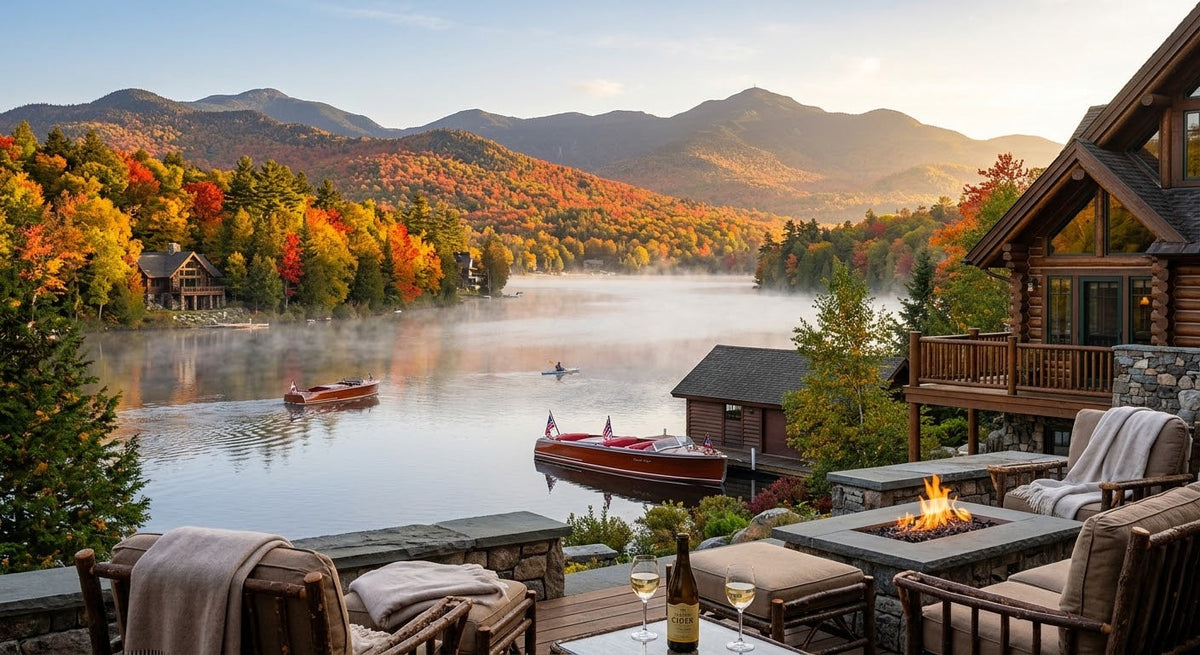
The Color & Calorie Clock: 10 Fall Hikes to Catch Peak Foliage—and Put Your Fitness to Work
Follow October Color Across America While Discovering What the Trail Is Asking From Your Body
What If Your Fall Foliage Map Were Also a Fitness Map?
Most fall hiking guides answer one question:
Where should I go to see beautiful leaves?
We want to answer two.
Where should I go—and what will my body actually be doing while I'm there?
Because there's a big difference between strolling a relatively level forest loop and spending four hours climbing rocky terrain with a daypack.
Both count as hiking.
They are not remotely the same workout.
And for active women, that's where fall travel gets much more interesting.
This year, we're combining two ideas:
The October Color Clock, which follows peak foliage as it generally moves from northern and high-elevation regions toward lower elevations and farther south...
...and the Trail Energy Clock, which helps you understand how distance, hills, terrain, speed and carrying a pack can dramatically change the energy demand of a hike.
Think of it as autumn sightseeing with a fitness dashboard.
Not because we're suggesting you choose a trail according to which one burns the most calories.
Quite the opposite.
Knowing approximately how demanding a hike may be can help you choose the right challenge, bring enough food and water, plan recovery—and appreciate just how much work your body is doing while you're busy staring at maple trees.
And trust us:
You will be staring at maple trees.
First, Let's Talk About Hiking Calories Without Turning Fall Into a Math Class
How many calories does hiking burn?
The answer everyone loves:
It depends.
Body size matters.
Pace matters.
Elevation matters.
Terrain matters.
A backpack matters.
Stopping every 90 seconds to photograph a particularly magnificent red maple definitely matters.
The 2024 Compendium of Physical Activities, one of the major scientific references used to classify exercise energy expenditure, places different types of hiking across a surprisingly wide range.
Slow hiking through fields or hillsides is approximately 3.8 METs.
Normal-paced hiking through hills is around 5.3 METs.
Cross-country hiking is approximately 6 METs.
Hiking or organized walking with a daypack can reach about 7.8 METs.
For context, a MET is a standardized way researchers describe the energy cost of physical activity. The Compendium defines one MET as roughly 1 kcal per kilogram of body weight per hour.
That gives us a useful—but intentionally approximate—trail guide:
| Hiking Style | Approx. MET | Estimated Calories/Hour at 140 lb | 160 lb | 180 lb |
|---|---|---|---|---|
| Slow hiking / ambling hills | 3.8 | ~240 | ~275 | ~310 |
| Normal hiking through hills | 5.3 | ~335 | ~385 | ~435 |
| Cross-country / more demanding terrain | 6.0 | ~380 | ~435 | ~490 |
| Hiking with a daypack | 7.8 | ~495 | ~565 | ~635 |
These are estimates, not personalized measurements.
The Compendium itself cautions that standard MET values were developed primarily to classify activity across populations rather than precisely predict one person's energy expenditure. Individual metabolism, age, fitness, body composition, pace and conditions can all change the actual number.
So here's our SportPort rule:
Use the calorie estimate to pack the snack—not to judge the hike.
Why Active Women Should Care About the Number
There is a useful reason to understand hiking energy expenditure that has nothing to do with weight loss.
It gives you context.
A four-hour mountain hike isn't simply "a long walk."
If you're climbing, carrying water, negotiating rocks and gaining elevation, your energy requirements can be substantial.
Knowing that helps explain:
Why you're suddenly ravenous afterward.
Why yesterday's hike left your legs surprisingly tired.
Why a protein bar and water belong in the pack.
Why today's hike might deserve tomorrow's easier workout.
The National Park Service specifically recommends bringing food and water when hiking and notes that hiking can drain energy quickly.
That's the information we're interested in.
Not:
"How much food did I earn?"
But:
"How much work am I asking my body to perform?"
Much better question.
Now let's follow the leaves.
THE OCTOBER COLOR & CALORIE CLOCK
Fall doesn't peak across America simultaneously.
It generally moves.
Northern latitudes and higher elevations often change first.
Then the color works southward and downhill.
Weather can speed up or delay the process, so think of every date below as a planning window—not a guarantee.
In 2026, that progression is already visible.
New York's September 30–October 6 report shows near-peak and peak foliage reaching portions of the Adirondacks, while New Hampshire's September 29 update had the White Mountains around 35–55% color change.
So if you're reading this in early October:
The clock is already ticking.

1. Adirondack Mountains, New York
Color Clock: Early October
Want the full fall experience?
Start here.
New York's current 2026 foliage reporting shows near-peak and peak conditions already arriving throughout parts of the Adirondacks during the first week of October.
The visual palette is classic Northeast autumn:
Red maple.
Yellow birch.
Orange.
Burgundy.
Gold.
Evergreen.
Mountain lakes.
It's basically fall showing off.
The Fitness Angle
Choose a moderate Adirondack hike and you're no longer merely leaf-peeping.
You're climbing.
Uneven trails and elevation turn ordinary walking into more substantial lower-body and cardiovascular work.
For a woman around 140–180 pounds, a steady hilly hiking pace might roughly land in the 335–490 calorie-per-hour range, depending on intensity.
That's a useful distinction.
A two-hour mountain hike may be a completely different training load than the same amount of time walking around town.
What Your Body Gets
Cardiovascular endurance.
Glute and quadriceps work on the ascent.
Eccentric leg work coming down.
Balance on irregular terrain.
And the deeply underrated skill of walking uphill while pretending you aren't breathing hard because another hiker just passed you.

2. Pictured Rocks National Lakeshore, Michigan
Color Clock: Late September Through the First 10 Days of October
Pictured Rocks doesn't just give you fall foliage.
It gives you foliage suspended above Lake Superior.
NPS says peak color generally lands during the last week of September or sometime within the first ten days of October, though wind and heavy rain can shorten the display.
The contrast is what makes this one extraordinary.
Golden hardwood forest.
Dark evergreens.
Blue water.
Rust- and orange-colored sandstone cliffs.
The Hike: Chapel Loop
This isn't the little scenic loop you squeeze in before lunch.
The full Chapel Loop is approximately 10.5 miles, traveling through forest and along the Pictured Rocks cliffs.
The Fitness Angle
This is where calorie estimates become practical.
A long hike with a daypack can be classified around 7.8 METs in the Compendium. For a woman weighing roughly 140–180 pounds, that can translate to approximately 495–635 calories per hour while actively hiking.
That does not mean you'll burn that rate continuously for the entire trip.
You stop.
You take photographs.
You eat.
You stare at Lake Superior for ten minutes because it looks ridiculous.
But it does tell you something important:
This is a genuine endurance day.
Bring food.
Bring water.
Respect the distance.
What Your Body Gets
Long-duration aerobic work.
Hill strength.
Foot and ankle stability.
Endurance under load.
And an excellent excuse for a very large dinner afterward.
3. Rocky Mountain National Park, Colorado
Color Clock: Late September Into Early October
New England doesn't own autumn.
Colorado just chooses a different color.
Gold.
Rocky Mountain National Park's quaking aspens turn brilliant yellow and gold against dark evergreen forests, with some orange, red and purple appearing among other plants. NPS notes that fall color begins at higher elevations first and progresses downward; autumn color can extend into October depending on weather.
The Hike: Bierstadt Lake
The hike from the Bierstadt Lake Trailhead is about 1.5 miles one way with roughly 500 feet of elevation gain. NPS specifically notes its scenic views and stands of aspen and describes the climb from this trailhead as steep uphill.
The Fitness Angle
The distance isn't enormous.
The altitude and climb are what change the conversation.
A steady uphill hiking effort fits roughly into our 335–490 calories per hour planning range for a 140–180-pound adult.
But calorie equations don't fully capture altitude.
You may perceive an effort as considerably harder at elevation than the same walk closer to sea level.
That's another reason calorie numbers should never become the whole story.
What Your Body Gets
Hill climbing.
Cardiovascular demand.
Leg strength.
Balance.
And altitude's gentle reminder that lungs also have opinions.

4. White Mountains, New Hampshire
Color Clock: First Two Weeks of October
New Hampshire says the White Mountains typically reach peak color during the first two weeks of October, and its September 29, 2026 report showed the region already moving rapidly through its color transition.
This is classic New England.
Scarlet.
Amber.
Copper.
Gold.
Evergreen.
Mountain notches.
You will understand why people plan entire vacations around leaves.
The Hike: Artist Bluff
Artist Bluff is ideal when you want an impressive visual payoff without dedicating the entire day to the trail.
But shorter doesn't necessarily mean effortless.
The climb creates a very different energy demand than strolling on level pavement.
The Fitness Angle
While climbing, think roughly 335–490 calories per hour for women in our example weight range.
But because this is a shorter outing, total energy expenditure can still be modest compared with a long-distance hike.
This is a great example of why calories per hour and total calories are two different things.
Steep can be intense.
Long can be demanding.
And sometimes short and steep is exactly what the itinerary needs.
What Your Body Gets
Uphill strength.
Cardiovascular work.
Balance.
A manageable dose of intensity.
And one of the more efficient foliage-to-mile ratios in New England.
5. Acadia National Park, Maine
Color Clock: Usually Mid-October
Maine's foliage moves north to south.
Northern sections typically peak first, while coastal Maine tends to turn later. Acadia says its peak foliage is generally around mid-October, though it can range from the first through third week.
That later timing makes Acadia especially useful if your October schedule doesn't allow an early-season trip.
The Hike: Jordan Pond Path
The Jordan Pond Path is about 3.3 miles and typically takes one to three hours. The route changes from easier walking surfaces to boardwalks, rocks and uneven footing around the western side of the pond.
The Fitness Angle
Because the terrain changes, your energy expenditure can too.
A slower scenic pace may land around 240–310 calories per hour, while more purposeful hiking across uneven terrain might move toward roughly 335–435 per hour for the example weights we've been using.
And because this trail is ridiculously photogenic, we're assuming several unscheduled stops.
Those do not count as training failure.
They count as Acadia.
What Your Body Gets
Steady aerobic movement.
Balance.
Ankle and foot control.
Low-to-moderate endurance.
And the reminder that rocks become much more interesting when they're surrounded by red leaves and a glacial lake.
6. Mount Rainier Country, Washington
Color Clock: Mid-October Can Be Spectacular—Weather Permitting
The Pacific Northwest has its own fall language.
Instead of endless maple forest, think:
Scarlet huckleberry.
Vine maple.
Subalpine meadows.
Evergreen forest.
Mountain backdrops.
And rapidly changing weather.
The Hike: Naches Peak Loop
NPS lists the Naches Peak Loop at about 3.5 miles with 500 feet of elevation gain, requiring around two hours for the round trip.
That makes it one of the nicest middle-ground hikes in this article.
Enough climbing to feel like an outing.
Short enough that you still have a day afterward.
The Fitness Angle
A moderate hilly effort puts our estimated burn around 335–490 calories per hour for a 140–180-pound adult.
For a two-hour outing, that becomes meaningful energy expenditure—but again, actual burn varies with pace, stops and conditions.
And fall mountain weather changes quickly.
Snow and cold can turn an autumn hike into something much more serious.
What Your Body Gets
Steady-state cardio.
Hill work.
Balance.
Glute and calf engagement.
Plus the emotional benefit of occasionally turning around and realizing Mount Rainier has been sitting behind you looking absurdly majestic.

7. Shenandoah National Park, Virginia
Color Clock: Generally Mid-October, With Elevation Creating the Schedule
Shenandoah may be one of the easiest places to understand the Color Clock because the changing leaves literally move downhill.
The park's length and elevation range mean color can vary dramatically from one area to another, and Shenandoah is maintaining a dedicated 2026 Fall Color Report.
The Hike: Stony Man
Stony Man is only about 1.6 miles round trip, with roughly 340 feet of elevation gain. NPS rates it among the park's easier hikes and estimates about an hour of hiking time.
This makes it ideal for someone who wants the mountain view without converting her fall weekend into an endurance event.
The Fitness Angle
At a moderate uphill pace, expect somewhere in the neighborhood of 240–435 calories per hour, depending on pace and body size.
The bigger lesson?
You don't need a 10-mile hike to receive meaningful movement.
A shorter trail still asks for climbing, balance and controlled descending.
What Your Body Gets
Cardio.
Leg strength.
Footing practice.
A manageable dose of elevation.
And enough energy left afterward to explore Skyline Drive.
That's good vacation programming.
8. Cuyahoga Valley National Park, Ohio
Color Clock: Third Week of October—With Good Color Throughout Much of the Month
Now the clock moves deeper into October.
NPS says Cuyahoga Valley typically reaches peak color during the third week of October, though different trees change at different times, producing worthwhile color throughout the month.
Late October is particularly interesting around the Ledges as oaks and lower-growing vegetation turn.
The Hike: The Ledges
The main Ledges trail runs about 1.8 miles, with sandstone formations and an overlook across the valley.
It's a wonderful reminder that a fall hike doesn't need to involve an enormous mountain.
Terrain can create interest all by itself.
The Fitness Angle
Think of this as a 240–435 calorie-per-hour type of hike for the weight range we're using, depending on pace and how aggressively you tackle the rolling, rocky terrain.
It's less about massive energy expenditure and more about movement quality.
What Your Body Gets
Balance.
Coordination.
Light cardiovascular conditioning.
Rocky-terrain footwork.
And plenty of reasons to stop saying:
"Ohio? For fall hiking?"
Yes.
Ohio.

9. Great Smoky Mountains National Park, Tennessee & North Carolina
Color Clock: Mid-October Through Early November, Depending on Elevation
The Smokies don't have one peak.
They have waves.
NPS says fall color generally develops above 4,000 feet from early to mid-October, then moves toward middle and lower elevations, where the most brilliant displays commonly occur between mid-October and early November.
That huge elevation range is one reason the Smokies provide such a long foliage season.
It also means you can sometimes improve your leaf-peeping odds simply by changing elevation.
The Hike: Porters Creek Trail
Porters Creek offers several turn-around options.
A popular hike to Fern Branch Falls is roughly four miles round trip, while longer options can extend toward six miles. NPS categorizes it as moderate and notes roots, rocks, stream crossings and elevation gain.
The Fitness Angle
This is a genuine 335–490-calorie-per-hour style of outing for many women in our example range when moving steadily through the hills.
Stay out two or three hours and you can begin to understand why food and hydration planning matter.
The Smokies also receive enormous crowds in October, and NPS warns that congestion and limited parking can add substantial time to an outing.
Your hike may begin before you reach the trailhead.
Not technically.
But emotionally.
What Your Body Gets
Endurance.
Lower-body strength.
Balance.
Climbing and descending.
Longer-duration aerobic work.
And some of the greatest tree diversity on the entire list.
10. Arkansas Ozarks
Color Clock: Late October
Did you miss New England?
Good news.
Fall isn't over.
It's simply moved south.
Arkansas tourism says color generally begins in northern Arkansas during October, with the Ozarks typically reaching peak color in late October before the season continues southward into November.
This makes Arkansas the perfect ending to our October Color Clock.
The Hike: Whitaker Point
Whitaker Point—also known for its famous Hawksbill Crag overlook—looks out across the valleys surrounding the Buffalo National River. Arkansas tourism specifically highlights it as one of the state's memorable autumn viewpoints.
The Fitness Angle
A steady moderate hike over rolling and hilly terrain can reasonably sit around 335–490 calories per hour for our example body-weight range.
But here's what your watch won't capture:
The amount of time you'll spend standing at the overlook saying:
"Okay. One more picture."
Again.
Correct behavior.
What Your Body Gets
Cardio.
Leg endurance.
Balance.
Moderate hill work.
And proof that autumn doesn't end when Vermont says it does.
So Which Fall Hike Burns the Most Calories?
Tempting question.
Wrong question.
The long answer is that your total hiking energy expenditure is largely shaped by four things:
Intensity × Body Size × Time × Terrain
A 30-minute steep hike may have a high hourly energy cost but lower total expenditure.
A three-hour moderate hike can accumulate far more total work.
Add a pack?
Demand rises.
Increase elevation gain?
Demand rises.
Move faster?
Demand rises.
Stop for photographs?
Demand falls temporarily.
And that's fine.
You're not auditioning for the Fall Foliage Olympics.
The Better Question: What Kind of Hiking Day Do You Want?
This is where calorie estimates become genuinely useful.
Want an active recovery day?
Choose a shorter scenic trail such as Stony Man or the Ledges.
You'll move, climb, challenge balance and still have energy for the rest of the day.
Want a solid fitness outing?
Choose a moderate two- to four-hour route with rolling terrain.
Think Jordan Pond, Naches Peak or Porters Creek.
Want the hike to be the day's workout?
Now you're looking at something closer to Pictured Rocks' Chapel Loop.
Long duration.
Pack.
Uneven terrain.
Substantial time on your feet.
That's not just sightseeing.
That's training with exceptional scenery.
Calories Can Tell You Something Your Watch Sometimes Doesn't
Here is one of the reasons we like understanding METs instead of blindly trusting the calorie number on a wearable.
A smartwatch is estimating.
Different devices use heart rate, movement, body characteristics and proprietary algorithms differently.
The trail itself gives us another set of clues.
Distance.
Elevation.
Time.
Pack weight.
Terrain.
If you finished a long mountain hike and your watch tells you that you barely used any energy...
Your watch does not automatically win the argument.
Look at the whole experience.
Ladies, Please Don't Use the Calorie Number to Underfuel the Adventure
This is an important distinction.
We included calorie estimates because our readers are active women and because energy expenditure can help us understand how physically demanding hiking actually is.
We're not including it so you can bargain with dinner.
On a longer outing, your body needs fuel.
NPS recommends bringing nutritious food and water and notes that hikers should consider both trip length and the possibility that plans take longer than expected.
That becomes particularly relevant on a cool autumn day because lower temperatures can disguise how much you're sweating.
Bring water.
Bring something to eat.
And on longer hikes, carry more than the absolute minimum.
A protein bar that comes home uneaten is not a planning failure.
It's insurance.
Try the SportPort Fall Hike Formula
Before choosing a trail, look at four things:
Color.
Is this region likely to be turning during your travel window?
Challenge.
How long, steep and technical is the route?
Calories.
Not as a target—but as a clue about how much energy the day may require.
Conditions.
Weather, sunset, trail status, elevation and crowds.
Put those four together and you stop choosing hikes simply because the photograph looked nice.
You start planning an experience.
That's much more useful.
A 90-Minute Hike Can Give You More Than a Workout
Calories are easy to quantify.
That's probably why we talk about them so much.
But hiking gives us a long list of things that never appear in the calorie total.
Balance.
Proprioception.
Foot and ankle stability.
Cardiovascular endurance.
Lower-body strength.
Terrain awareness.
Time outside.
Distance from screens.
Mental decompression.
Confidence navigating somewhere unfamiliar.
And sometimes conversation with someone you love because you've been walking beside each other for two hours without a television in the room.
No wearable measures that particularly well.
Fall Hiking Is Sneaky Fitness
Maybe that's one of the best things about it.
You don't necessarily leave saying:
"What an incredible 5.3-MET training session."
You say:
"Did you see that view?"
Meanwhile, you climbed.
Balanced.
Carried.
Stepped over roots.
Walked uphill.
Controlled the descent.
Stayed on your feet for hours.
That is fitness hidden inside an experience.
And for many women, that is the kind of movement that's easiest to keep doing.
Don't Let Peak Foliage Make You Forget Trail Safety
Autumn trails create a few unique challenges.
Wet leaves can hide rocks and roots.
Temperatures can change rapidly.
Daylight disappears earlier.
Mountain weather can move quickly.
And some popular foliage destinations experience substantial congestion.
The National Park Service recommends knowing your limits, researching the route and terrain, carrying the Ten Essentials where appropriate, bringing adequate food and water, and paying attention to changing conditions.
Our additional October rule:
Know sunset before you start.
A beautiful late-afternoon trail can become a very different experience after dark.
Pack Your Fall Active Essentials Kit
This is exactly where the SportPort Fall Active Essentials Kit from our previous fall guide becomes useful.
Think through its five pillars:
Warmth.
An adaptable technical layer.
Safety.
Phone, ID, light and visibility.
Recovery.
Water, electrolyte option, snack, perhaps a small recovery tool.
Motivation.
Your hiking playlist, podcast, friend—or simply the promise of the overlook.
Organization.
Everything in a dedicated place so nothing gets left behind.
Your pack becomes the same portable home base we use for running, tennis, riding or everyday outdoor fitness.
Only now it has a trail map in it.
The Leaves Aren't the Only Thing Changing With Elevation
One final fun way to think about this.
As you climb a mountain in October, two things may happen simultaneously.
Your heart rate rises.
And the forest changes.
Temperature shifts.
Tree species change.
Foliage stage may change.
The view expands.
Your body is responding to the same landscape you're there to see.
That's why hiking is such an interesting form of exercise.
You aren't merely performing repetitions in front of scenery.
The scenery is creating the workout.
A hill determines your intensity.
A rock asks for balance.
A long trail asks for endurance.
Elevation changes your effort.
And autumn provides the motivation to keep walking around the next bend.
Don't Chase the Biggest Calorie Number. Chase the Best Day.
If Chapel Loop uses more energy than Stony Man, does that make Chapel Loop the better hike?
Of course not.
Maybe you have two hours.
Maybe you're traveling with your daughter.
Maybe you played tennis yesterday.
Maybe you're recovering from a long run.
Maybe you simply want to walk through brilliant leaves and still have enough energy for dinner in town.
Fitness is not a contest to see who can make every activity hardest.
It's the capacity to choose the experience you want.
That's why the Color & Calorie Clock works.
The foliage window tells you where to go.
The trail profile tells you what you're taking on.
The energy estimate reminds you to fuel and recover accordingly.
Then you get to focus on the fun part.
The leaves.
Follow Fall. Fuel the Hike. Enjoy the View.
By early October, the Adirondacks and northern regions begin stealing the show.
Then New Hampshire.
Maine.
The Mid-Atlantic.
Ohio.
The Smokies.
And finally the Ozarks.
Fall moves.
You can move with it.
Some hikes will burn a few hundred calories.
Some long mountain days can demand far more.
But the number is never the reason we go.
We go because movement feels different when there is somewhere beautiful to move through.
At SportPort Active, that's the version of fitness we love most.
Fitness that takes you somewhere.
Fitness that becomes part of a trip.
Fitness that lets you climb a little farther, stay out a little longer and say yes to experiences you might otherwise watch from the parking lot.
So use the Color Clock.
Check the trail.
Understand the physical demand.
Pack the snack.
Bring the layer.
Charge the phone.
Then forget about the calorie number for a while.
There's a mountain covered in red and gold waiting for you.
The leaves are changing. Your view should too.
Read more

Cooler days don't need to derail an active routine. Build a five-pillar fall kit around warmth, safety, recovery, motivation and organization so movement stays ready when life gets busy.

Same speed. Same time. Different environment. A practical look at treadmill vs outdoor running, indoor vs outdoor cycling, calorie estimates, watts, cooling and winter training.