


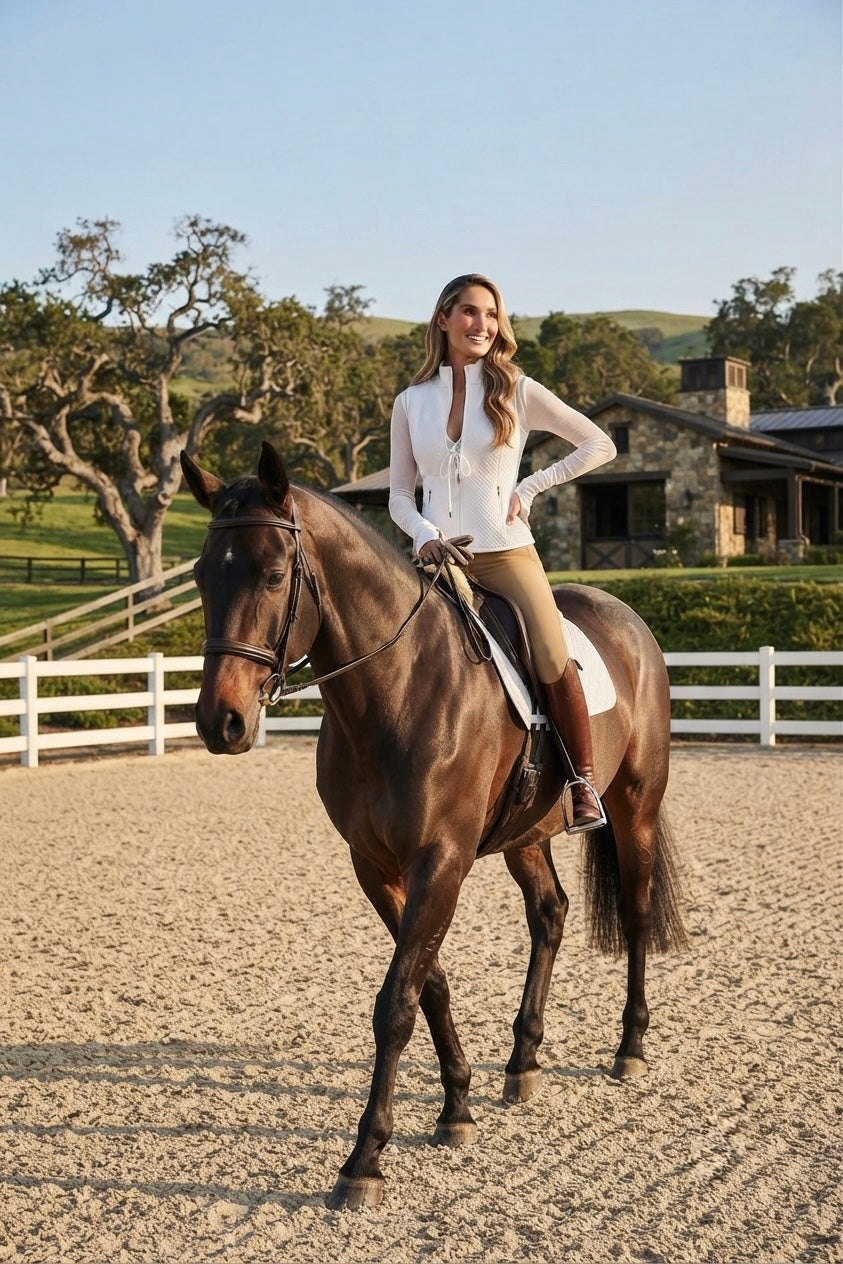
The Power of the Horse: Why Equestrian Riding Is One of the Best Full-Body Workouts for Women
There are few experiences that rival the feeling of sitting atop a horse as it quietly walks down a wooded trail, the rhythm of its stride matching your own breathing while the worries of everyday life begin to fade into the background.
For thousands of years, horses have played an extraordinary role in human history. They carried explorers across continents, helped build civilizations, transported families before the invention of automobiles, and became trusted partners in agriculture, military service, and sport. Throughout history, one thing has remained remarkably consistent—the unique bond between humans and horses.
Today, that relationship has evolved into something equally meaningful.
Horseback riding has become one of the world's most rewarding recreational activities, combining fitness, nature, companionship, and lifelong learning into a single experience. Whether you're taking your very first riding lesson, enjoying leisurely trail rides with friends, competing in dressage, or spending weekends at horse shows, riding offers benefits that extend far beyond physical exercise.
For many women, horses become part of their lifestyle.
The barn becomes a second home.
Weekend rides become cherished traditions.
The horse becomes both teacher and friend.
Unlike many forms of exercise that can eventually feel repetitive or routine, horseback riding constantly presents new experiences. Every horse has a unique personality. Every ride is different. Every trail offers a new adventure. That variety keeps both the mind and body actively engaged, making horseback riding one of the few sports people continue enjoying well into their seventies and eighties.
At SportPort Active, we've always believed movement should inspire joy rather than obligation. Fitness shouldn't feel like punishment—it should become something you genuinely look forward to. Horseback riding perfectly captures that philosophy by blending exercise, mindfulness, and connection with the outdoors into one unforgettable experience.

Horseback Riding Is One of the Most Complete Workouts You Can Do
One of the biggest misconceptions about horseback riding is that the horse does all the work.
Spend just one hour in the saddle, and you'll quickly discover otherwise.
While the horse provides the forward motion, the rider is constantly working. Every stride the horse takes requires your body to make subtle yet continuous adjustments to remain balanced, communicate clearly with your horse, and respond to changing terrain, speed, and direction.
Unlike walking on stable ground, horseback riding places your body on a moving platform that shifts in multiple directions simultaneously. As a result, hundreds of muscles work together almost effortlessly to keep you centered in the saddle.
What makes horseback riding especially unique is that these muscular contractions happen automatically.
You're rarely thinking about tightening your core or stabilizing your shoulders.
Your body simply responds.
Researchers in equestrian sports medicine recognize horseback riding as a highly effective form of functional exercise because it develops several aspects of physical fitness simultaneously rather than isolating individual muscle groups.
Instead of performing one repetitive motion over and over again, horseback riding combines:
- Muscular strength
- Core stability
- Dynamic balance
- Flexibility
- Coordination
- Cardiovascular endurance
- Reaction time
- Neuromuscular control
- Body awareness
All within a single workout.
According to the United States Equestrian Federation (USEF), successful riders depend upon balance, timing, flexibility, coordination, communication, and partnership—not brute strength. The most accomplished equestrians appear almost effortless in the saddle because they've learned to move with the horse rather than against it.
That partnership is where the true athleticism begins.
Sports medicine researchers often describe horseback riding as a form of dynamic neuromuscular training. Every stride stimulates communication between the brain and muscles, requiring rapid adjustments in posture, muscle activation, and coordination. These continual corrections improve proprioception—your body's awareness of where it is in space—which plays a critical role in balance, injury prevention, and overall movement quality.
Perhaps most surprisingly, many riders don't even realize how physically demanding horseback riding is until they finish a lesson and discover muscles they didn't know they had.
Because horseback riding is enjoyable, the exercise often goes unnoticed.
You're focused on reading your horse's body language, anticipating the next movement, enjoying the scenery, and refining your riding skills—not counting repetitions or watching a treadmill timer.
That's one reason horseback riding remains one of the most sustainable lifelong sports.
It doesn't simply improve physical fitness.
It creates an experience people genuinely love returning to.

The Science of Riding: Why Horseback Riding Is a Full-Body Workout
Every stride a horse takes produces movement through three different planes of motion—forward and backward, side to side, and rotationally.
Your body responds instinctively.
Deep stabilizing muscles activate.
The pelvis subtly rotates.
The spine adjusts.
Shoulders remain level.
Legs maintain steady contact.
Hands communicate softly through the reins.
Researchers have found that these continuous adjustments closely resemble the body's natural walking mechanics while placing additional demands on coordination and postural control. Unlike machines in a gym that move through fixed patterns, horseback riding challenges the body in unpredictable ways, encouraging muscles to work together rather than independently.
This is why many physical therapists and rehabilitation specialists appreciate activities that combine movement, balance, posture, and coordination into one integrated experience.
Horseback riding doesn't isolate the body.
It teaches the body to function as one complete system.
Let's take a closer look at the remarkable ways horseback riding strengthens the body from head to toe.
Core Strength
Every experienced rider will tell you the same thing:
Good riding begins with a strong core.
Your abdominal muscles aren't simply helping you sit upright—they're acting as the body's central stabilizing system. Every stride your horse takes challenges your balance, requiring your deep core muscles, obliques, lower back, pelvic floor, and diaphragm to work together as one coordinated unit.
Unlike traditional abdominal exercises that isolate a single movement, horseback riding develops functional core strength that transfers directly into everyday life. Whether you're lifting groceries, hiking a mountain trail, practicing yoga, playing pickleball, or simply maintaining better posture at your desk, a stronger core supports nearly every movement you make.
Researchers have found that improved core stability contributes to better spinal alignment, greater balance, reduced lower back discomfort, enhanced athletic performance, and more efficient movement patterns. Riders often notice that after spending time in the saddle, they naturally stand taller, move more confidently, and feel more stable during other physical activities.
And perhaps the best part?
You're strengthening your core without ever counting a single sit-up.
Hip Mobility and Flexibility
Healthy hips are essential for nearly every movement we make—from climbing stairs and hiking a trail to lifting weights, practicing yoga, and simply walking with ease. Unfortunately, modern lifestyles often work against us. Hours spent sitting behind a desk, driving, or looking down at a computer gradually tighten the hip flexors, weaken the glutes, and reduce overall mobility.
Horseback riding naturally helps counteract many of those effects.
As your horse moves beneath you, your pelvis gently follows the horse's stride, creating a rhythmic motion that encourages flexibility while simultaneously strengthening the muscles surrounding the hips. Unlike repetitive gym exercises that isolate one movement pattern, horseback riding asks your hips to remain relaxed, supple, and responsive throughout every gait.
Researchers have long recognized the remarkable similarity between a horse's walking gait and the natural movement pattern of the human pelvis during walking. This repetitive, rhythmic motion is one reason horses are used in therapeutic rehabilitation programs around the world. During a typical ride, your pelvis follows thousands of subtle movements that encourage mobility, balance, and coordination without placing excessive stress on the joints.
Many riders report improvements in:
- Hip flexibility
- Pelvic stability
- Range of motion
- Lower body coordination
- Overall body awareness
These improvements don't remain in the saddle—they often carry over into everyday life. Activities such as gardening, hiking, strength training, dancing, tennis, pickleball, and even getting in and out of the car become easier as hip mobility improves.
For women entering their 30s, 40s, and beyond, maintaining hip mobility becomes increasingly important for preserving long-term independence and reducing injury risk. Horseback riding provides an enjoyable way to keep those joints moving naturally while building strength at the same time.
Balance and Coordination
One of the most impressive benefits of horseback riding is the way it develops balance without you ever consciously practicing it.
Every transition from a walk to a trot... every change of direction... every hill... every turn... requires your brain and body to communicate instantly.
As your horse shifts its weight, your body responds automatically with tiny adjustments that help you remain centered in the saddle. Those continual corrections strengthen the intricate relationship between your muscles, joints, nervous system, and inner ear.
Researchers refer to this process as improving proprioception—your body's ability to know where it is in space.
Proprioception plays an important role in nearly every movement we make. It helps prevent falls, improves athletic performance, enhances coordination, and allows us to react more quickly to unexpected situations.
According to the American College of Sports Medicine (ACSM), activities that challenge balance become increasingly valuable as we age because they help maintain mobility, confidence, and independence.
Horseback riding accomplishes this naturally.
Rather than standing on a balance board inside a gym, you're improving your balance while enjoying fresh air, connecting with your horse, and experiencing one of the oldest outdoor sports in the world.
Posture Improves Naturally
Good posture is no longer something many of us naturally maintain.
Hours spent working at computers.
Looking down at smartphones.
Driving.
Watching television.
Modern life has encouraged rounded shoulders, tight chest muscles, weakened upper backs, and forward head posture.
Horseback riding gently encourages the opposite.
Proper riding position requires an open chest, relaxed shoulders, neutral spine, engaged core, and balanced pelvis. Rather than forcing perfect posture through rigid positioning, horseback riding teaches the body to find proper alignment through movement.
The horse immediately responds when a rider becomes unbalanced.
Lean too far forward...
The horse feels it.
Collapse one hip...
The horse notices.
Round the shoulders...
Communication changes.
Over time, riders naturally learn better posture because it creates clearer communication with the horse.
Many experienced equestrians discover they begin standing taller, walking with greater confidence, and experiencing less neck and lower back discomfort—even when they're no longer riding.

Grip Strength and Upper Body Endurance
Horseback riding is often associated with powerful legs, but your upper body is working just as hard.
Good riders maintain soft, consistent contact with the reins while allowing their arms to move fluidly with the horse's head and neck.
This seemingly effortless motion requires tremendous muscular endurance.
Your hands.
Wrists.
Forearms.
Biceps.
Shoulders.
Upper back.
Chest.
Core.
All work together to maintain quiet, controlled communication.
Unlike lifting heavy weights, horseback riding develops muscular endurance through precision rather than force.
The goal isn't to pull harder.
It's to communicate more softly.
That delicate balance develops excellent grip strength, shoulder stability, and upper-body coordination while reducing unnecessary tension throughout the body.
Leg Strength Without High Impact
If you've ever completed your first riding lesson and wondered why your inner thighs felt sore the next morning...
You're not alone.
Horseback riding develops remarkable lower-body strength.
Throughout every ride your legs continuously stabilize your body while gently communicating with your horse through subtle pressure cues.
The muscles working hardest include:
- Adductors (inner thighs)
- Quadriceps
- Hamstrings
- Gluteal muscles
- Calves
- Hip stabilizers
Unlike running, horseback riding builds muscular endurance without repetitive pounding on the knees, ankles, or hips.
That makes riding particularly appealing for women looking for lower-impact exercise while still challenging major muscle groups.
Instead of absorbing impact thousands of times as you would during road running, your muscles remain active through controlled engagement, making horseback riding an excellent complement to strength training, yoga, walking, cycling, and hiking.

Cardiovascular Benefits
Horseback riding may not immediately come to mind when people think about cardiovascular exercise, yet many equestrian disciplines elevate heart rate enough to provide meaningful aerobic conditioning.
The intensity varies depending on the activity.
A peaceful trail ride offers gentle movement and stress reduction.
Posting trot raises cardiovascular demand considerably.
Jumping courses, barrel racing, polo, eventing, endurance riding, fox hunting, mounted games, and cross-country riding can quickly become vigorous workouts requiring stamina, coordination, and muscular endurance.
Researchers estimate riders can burn several hundred calories during an hour of riding depending on the discipline, pace, terrain, and rider involvement.
The Centers for Disease Control and Prevention (CDC) Physical Activity Guidelines recommend activities that combine endurance, strength, flexibility, and balance to support lifelong health.
Horseback riding naturally develops all four.
It's one of the rare activities that trains your cardiovascular system while simultaneously improving coordination, posture, flexibility, muscular endurance, and mental focus.

Equestrian Sports Offer Something for Everyone
One of the greatest misconceptions about horseback riding is that it's a single sport.
In reality, the equestrian world offers dozens of disciplines, each with its own personality, culture, and athletic demands.
Perhaps you're drawn to the elegance of dressage, often called "horse ballet," where precision, communication, and graceful movement take center stage.
Or maybe you'd enjoy the excitement of show jumping, navigating beautifully designed courses that challenge both horse and rider.
Love the outdoors?
Trail riding allows riders to explore forests, mountains, beaches, and countryside while reconnecting with nature.
Looking for speed?
Barrel racing, mounted shooting, polo, and endurance riding offer incredible athletic challenges.
Interested in Western traditions?
Ranch riding, reining, and working cow horse celebrate the partnership between horse and rider through practical skills rooted in American ranch history.
No matter your personality, there is truly a discipline for everyone.

Getting Started Is Easier Than You Think
One of the biggest myths about horseback riding is that you need to own a horse before you begin.
You don't.
Across the country, riding schools, lesson barns, and equestrian centers offer beginner-friendly lessons using experienced horses specifically trained for new riders.
Organizations such as the Certified Horsemanship Association (CHA) recommend learning from certified instructors who emphasize safety, horse care, and proper riding techniques from the very first lesson.
Your first lesson typically includes:
- Learning how to safely approach a horse
- Basic grooming techniques
- Saddling and bridling
- Mounting safely
- Proper riding position
- Steering
- Stopping
- Walking comfortably
- Building confidence
Every accomplished equestrian began exactly where you are.
One lesson at a time.
Safety Always Comes First
Like every outdoor sport, horseback riding becomes even more enjoyable when safety is part of every ride.
Experienced equestrians recommend wearing:
- ASTM/SEI-certified riding helmet
- Proper riding boots with a defined heel
- Comfortable fitted clothing
- Riding gloves
- Sunscreen (SPF 30+)
- UV-protective sunglasses
- Refillable water bottle
- Healthy protein snacks for extended rides
- Small first-aid kit
- Cell phone carried securely
Hydration deserves special attention, particularly during summer months. Horses generate body heat, and riders spend long hours exposed to the sun. Drinking water before, during, and after your ride helps reduce fatigue and supports overall performance.
The American Academy of Dermatology recommends applying broad-spectrum sunscreen at least 15 minutes before heading outdoors and reapplying every two hours—or more often if you're sweating heavily.
Most importantly...
Respect the horse.
These magnificent animals are intelligent, sensitive partners who thrive on trust, consistency, and calm leadership. The more time you spend learning their behavior and communication, the stronger your partnership becomes.

Coming Up in Part 2
The physical benefits of horseback riding are only part of the story.
In Part 2, we'll explore one of the most remarkable aspects of the equestrian world—the profound emotional connection between horses and humans. We'll look at the growing field of equine-assisted services, including therapeutic riding, hippotherapy, and equine-assisted psychotherapy, and discover why horses are helping veterans with PTSD, individuals recovering from substance use disorders, children with autism spectrum disorder, and people living with anxiety and depression.
We'll also share our favorite SportPort Active riding ensembles, designed for long days at the barn, scenic trail rides, and everything in between. From maximum-support Apex Collection pieces to versatile layering options, you'll discover how premium compression apparel can keep you comfortable, supported, and ready for every adventure in the saddle.
At SportPort Active, we believe every ride is an opportunity to become stronger, healthier, and more connected—to nature, your horse, and yourself. We hope you'll join us for Part 2 as we continue exploring the extraordinary power of the horse.
Read more
Discover how SportPort Active combines couture paper patterns, one-inch grading, premium compression engineering, and years of athlete testing to create activewear that fits beautifully, performs f...
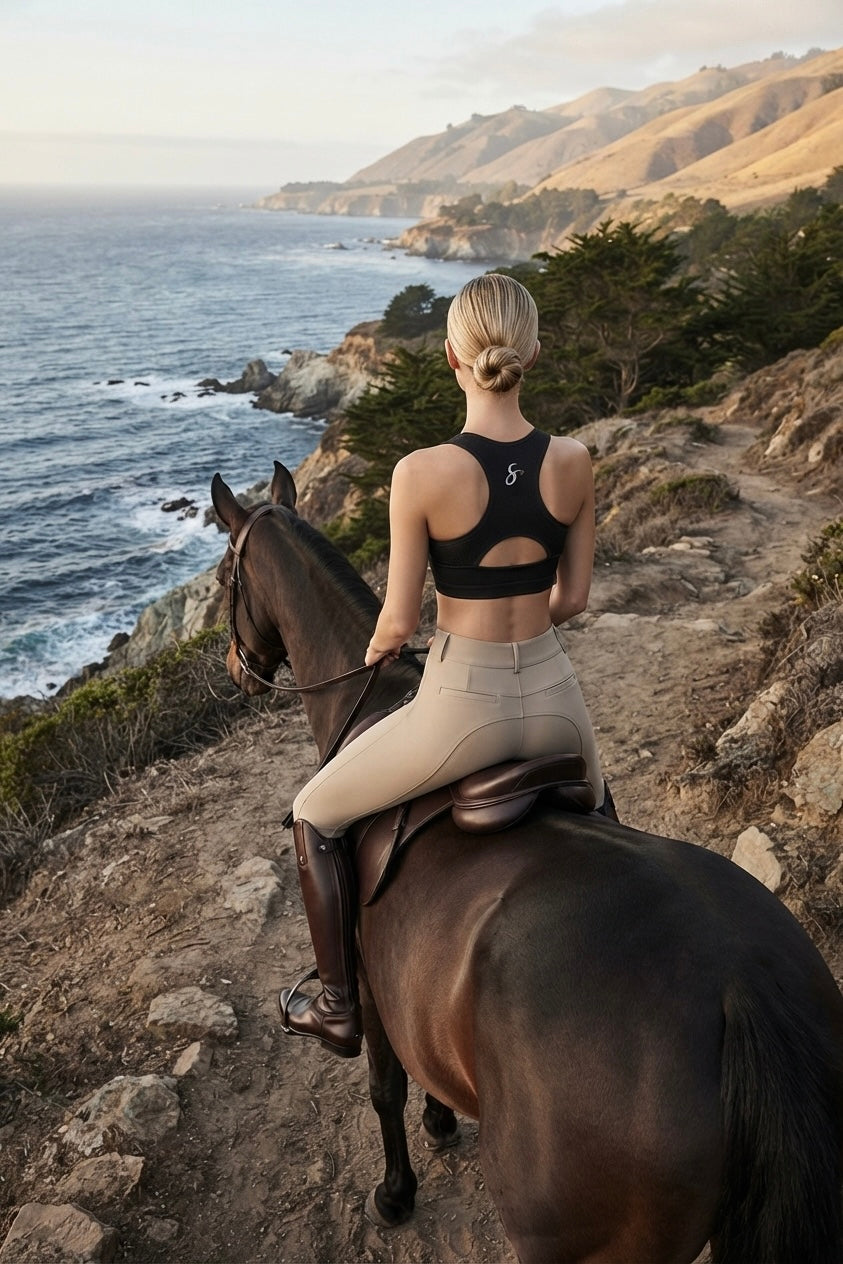
Discover how horses can support mental wellness, confidence, recovery, and connection through riding, equine-assisted services, and equestrian community.