


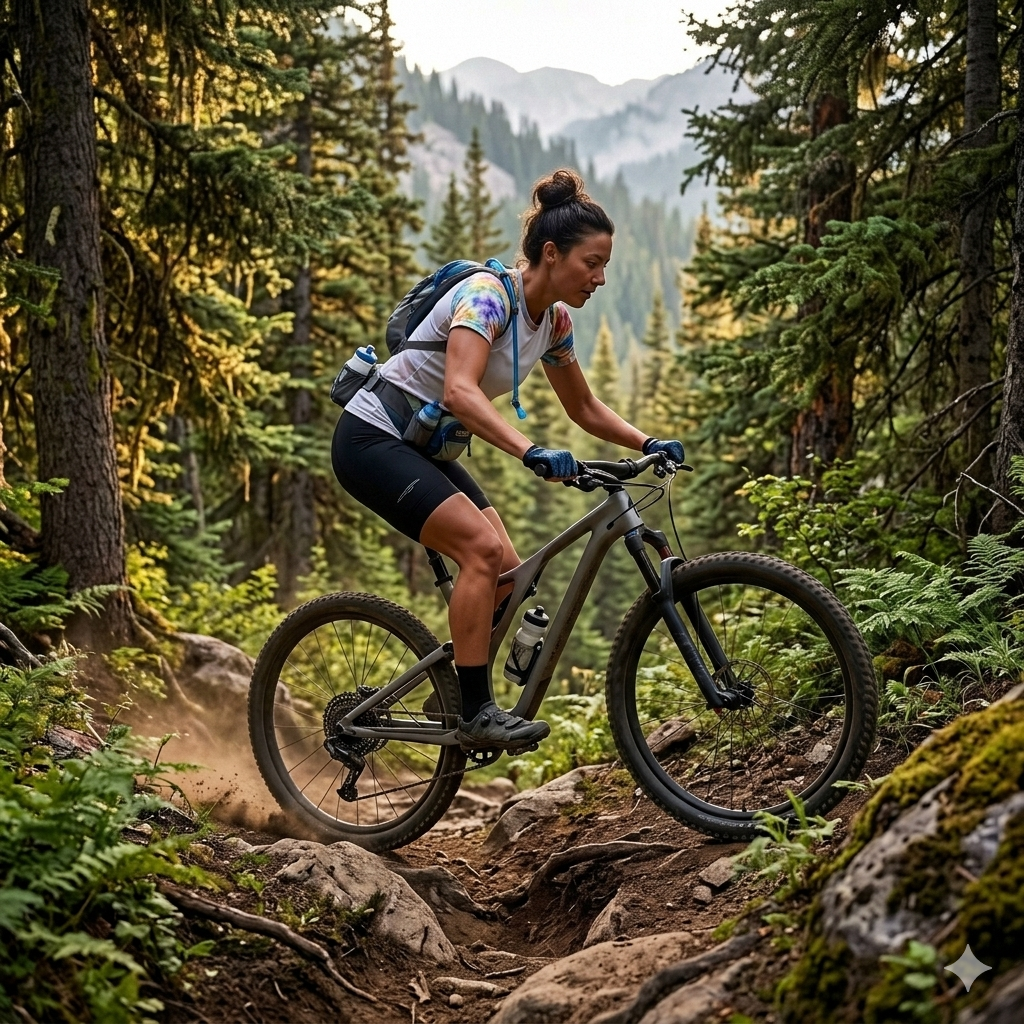
Mountain Biking for Women: Trail Riding Tips, Safety Essentials & What to Wear for Performance
There’s something empowering about mountain biking.
The sound of tires gripping dirt.
The rhythm of climbing.
The confidence that builds with every descent.
Mountain biking isn’t just cardio — it’s skill, strength, and mental focus all wrapped into one outdoor experience. And for active women who love adventure without sacrificing fitness, trail riding is one of the most rewarding workouts you can do.
But before you clip in and roll out, let’s talk about how to ride smarter, safer, and stronger — with expert-backed advice and the right gear.

Why Mountain Biking Is an Incredible Workout
Mountain biking engages:
• Lower-body strength (quads, glutes, hamstrings)
• Core stability (especially on uneven terrain)
• Upper body and grip strength
• Cardiovascular endurance
The American Council on Exercise (ACE) highlights cycling as a low-impact, joint-friendly cardiovascular activity that builds endurance while strengthening the lower body.
Mountain biking elevates that by adding balance, agility, and reactive movement.
Unlike road cycling, trail riding forces your body to adapt continuously — which improves coordination and muscular engagement.
Getting Started: Expert Trail Riding Advice
If you're new to mountain biking, don’t let the word “mountain” intimidate you.
Start small. Progress smart.
The International Mountain Bicycling Association (IMBA) emphasizes choosing trails that match your ability level and gradually building skills over time.
Beginner-Friendly Tips:
✔ Start on smooth, wide trails (often labeled green)
✔ Practice braking before riding downhill
✔ Keep your weight centered and eyes forward
✔ Stay relaxed in your upper body
Looking down at your front tire? Rookie mistake. Keep your eyes 10–15 feet ahead to anticipate terrain changes.

Trail Safety: What You Must Bring (No Exceptions)
Mountain biking is thrilling — but it demands preparation.
According to, REI’s outdoor cycling experts safety gear and hydration planning are essential before any ride.
Here’s your must-have trail checklist:
1️⃣ Helmet
Non-negotiable. A properly fitted, certified helmet dramatically reduces head injury risk.
2️⃣ Tire Pump or CO2 Inflator
Flat tires happen. Bring a compact pump or inflator.
3️⃣ Camelbak or Hydration Pack
Hydration packs allow hands-free water access and space for tools/snacks.
4️⃣ Snack Bars or Energy Bites
Mountain biking burns serious calories. Bring quick carbs + protein.
5️⃣ Sunscreen
Trail exposure = prolonged UV exposure. Reapply if riding over 90 minutes.
6️⃣ Multi-tool
For minor adjustments mid-ride.
7️⃣ Phone (securely stored)
For navigation and emergencies.
Prepared riders are confident riders.
Choosing the Right Trail for Your Level
Most trail systems categorize difficulty:
🟢 Green — Beginner
🔵 Blue — Intermediate
⚫ Black — Advanced
The IMBA recommends staying within your ability level and respecting trail signage to reduce injury risk.
For suburban riders, look for:
• Local park trail systems
• State park bike loops
• Forest preserves with marked MTB paths
Apps like Trailforks and AllTrails help identify difficulty ratings and terrain types.
What to Wear Mountain Biking (Performance Matters)
Trail riding demands:
• Breathability
• Compression stability
• No-chafe seams
• Secure pockets
• Shape retention
You’re climbing. Descending. Standing. Braking. Shifting weight.
Your clothing must move with you.

Apex Define Shorts
Compression That Stays Locked In
The Apex Define Shorts are ideal for trail riding.
✔ Warp-knit LYCRA® SPORT compression
✔ No-slip waistband
✔ Hidden EMF-protective pocket
✔ 3M reflective markers for early rides
Compression reduces muscle fatigue and keeps fabric stable during aggressive terrain shifts.
These aren’t “casual bike shorts.”
They’re engineered compression.
London Bridge Compression Tee
Breathable Structure with Performance Stretch
The London Bridge Athletic Stretch Tee delivers:
✔ 4-way stretch
✔ Moisture-wicking performance
✔ Lightweight breathability
✔ Shape retention
Ideal for trail airflow and durability without bulk.

Zephyr Tank Top with Built-In Support
Integrated Support for Aggressive Terrain
The Zephyr Tank with Built-In Sports Bra provides:
✔ Built-in maximum support
✔ Princess seam contouring
✔ Patented EMF secure phone pocket
✔ No layering needed
Less shifting. More stability. More focus on the trail.

Hydration & Energy: Why It Matters on Trails
Trail rides often exceed 60–90 minutes. According to the American College of Sports Medicine (ACSM), endurance exercise requires fluid replacement strategies to prevent dehydration and performance decline.
For most riders:
✔ Drink before you feel thirsty
✔ Add electrolytes if riding longer than 60–90 minutes
✔ Eat small snacks every 45–60 minutes on longer rides
Trail fatigue often stems from under-fueling, not fitness.
Trail Etiquette & Environmental Respect
Mountain biking shares space with hikers and wildlife.
IMBA promotes Leave No Trace principles:
• Stay on marked trails
• Yield appropriately
• Avoid riding muddy trails to prevent erosion
Respecting trails keeps them open and accessible.
The Mental Edge of Mountain Biking
Mountain biking requires presence.
You can’t scroll.
You can’t overthink emails.
You’re reacting, adjusting, balancing.
That kind of focus is deeply therapeutic.
Many riders report improved stress reduction and mental clarity after trail rides — likely due to a combination of exercise, nature exposure, and full-body engagement.
Quick FAQ (SEO Boost Section)
Is mountain biking good for beginners?
Yes. Start on green-rated trails and gradually build skills.
What gear do I need for trail riding?
Helmet, hydration pack, tire pump, snack bars, sunscreen, phone, multi-tool.
What should women wear mountain biking?
Compression shorts, moisture-wicking tops, supportive sports bras, and breathable performance fabrics.
Is mountain biking a good workout?
Yes — it improves cardiovascular endurance, leg strength, core stability, and balance.
Final Thoughts
Mountain biking is more than a ride.
It’s confidence-building.
It’s strength-developing.
It’s grounding.
With the right preparation, the right trail, and the right gear, you’ll not only ride stronger — you’ll ride smarter.
So pack your hydration, secure your helmet, slip into your Apex compression, and meet the trail.
Because adventure isn’t reckless.
It’s prepared.
More Mountain Biking Tips
Conquering the Trails: How Women are Mastering Mountain Biking
Everything I WISH I KNEW When I Started Mountain Biking
Read more

Discover the Apex Collection—premium warp-knit LYCRA® SPORT compression activewear with patented EMF protection, couture construction, and athlete-tested performance. Designed & made in the USA.

Meet SportPort Active founder Kim Highfield and the story behind the patented EMF-shielded sports bra pocket—luxury activewear designed for women’s movement, comfort, and confidence.