


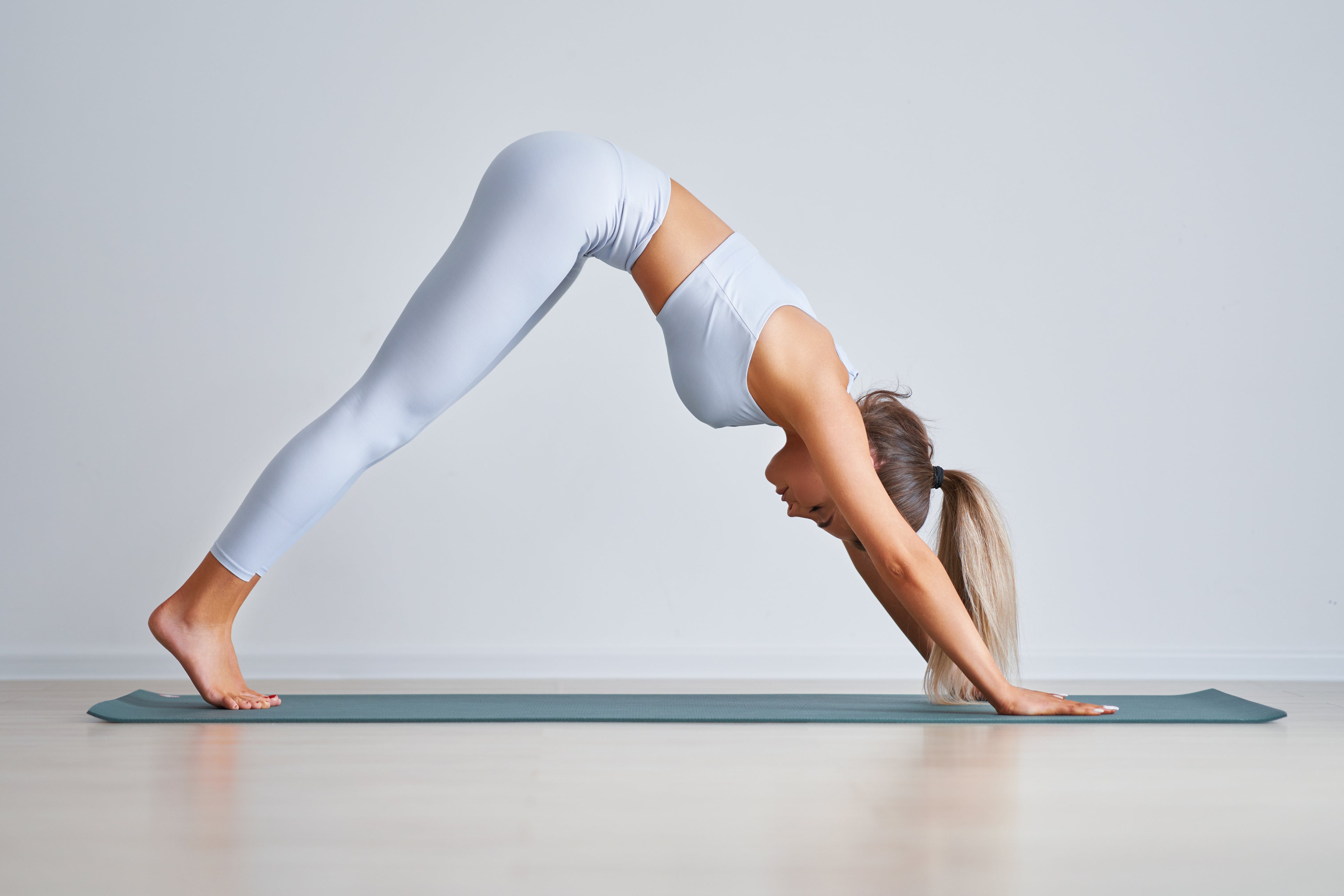
Stronger Back, Better Posture: 7 Simple Exercises to Ease Pain and Stand Taller in 2026
If you’ve ever ended a long day feeling like your shoulders live somewhere near your ears and your lower back is filing a complaint… welcome in.
Between desk work, driving, “mom taxi” duty, scrolling, and the occasional workout, your back is quietly doing a lot. No wonder chronic low back pain affects up to 28% of adults and is projected to reach 843 million cases worldwide by 2050.
The good news: you are not stuck with the ache. New research and expert guidelines are incredibly clear:
Targeted strengthening + smart movement = less pain, better posture, more energy.
And you don’t need an hour a day or a full gym. You do need consistency, good form, and a back-friendly wardrobe (hello, SportPort Active).
Let’s break down what the science says—and give you a practical, fun, 15-minute back-strength plan you can actually stick to.
Why Back Strength and Posture Matter So Much
Your “back” isn’t just your spine—it’s an entire support team:
-
Deep core muscles (front and sides)
-
Spinal stabilizers
-
Glutes and hips
-
Upper-back and shoulder muscles
Harvard Health and Mayo Clinic both emphasize that a strong back and core:
-
Support your spine and reduce the risk of injury
-
Make everyday activities (lifting kids, carrying groceries, sitting, standing) easier
-
Improve balance and stability
-
Help correct or prevent posture problems that can lead to pain
Good posture isn’t about “standing like a ballerina” 24/7. It’s about having enough strength and mobility that your body can stack itself efficiently—without constant strain.
What the Newest Research Says About Exercise & Back Pain
A few interesting findings from recent studies and expert reviews:
-
A 2025 review on low back pain treatment found that strengthening and stabilizing exercises plus regular physical activity (like Pilates, tai chi, yoga) improve pain and function in chronic low back pain.
-
A 2025 scoping review of 292 randomized trials noted that the most commonly prescribed home programs included core stability, trunk strengthening, and motor control exercises.
-
A large 2025 study in JAMA Network Open found that people who walked 101–124 minutes per day had a 23% lower risk of chronic low back pain than those who walked less, with brisk/moderate walking giving extra benefit.
In other words:
-
Move often.
-
Strengthen your core and back.
-
Walk more.
That’s the foundation we’ll use for your at-home routine.
Your Back-Strength Blueprint: Key Principles
Before we hit the exercises, a few simple rules:
-
Slow > wild.
Focus on control, not speed. Quality reps protect your spine. -
You shouldn’t feel sharp pain.
Mild muscle fatigue or “working” is OK. Sharp, shooting, or worsening pain? Stop and talk to a healthcare provider or physical therapist. -
Train the front and back.
Strong abs + strong glutes + strong upper back = happy posture. -
Stretch what’s tight.
Chest, hip flexors, and hamstrings often pull us into “desk posture.” Strength + gentle stretching is the combo. -
Consistency wins.
Ten to fifteen minutes, 3–5 days per week, beats a heroic hour once a month.
7 Expert-Backed Exercises to Ease Back Pain & Improve Posture
These moves are grounded in guidance from Harvard Health, Mayo Clinic, physical therapy literature, and recent posture and core research.
Always check with your healthcare provider first if you have osteoporosis, recent surgery, nerve symptoms (numbness, tingling, weakness), or significant pain.

1. Bridge – Back + Glute Strengthener
Why experts love it
Harvard and Mayo both include bridges as a foundational exercise to strengthen the lower back, glutes, and core, helping stabilize the spine and reduce strain on the lumbar area.
How to do it
-
Lie on your back with knees bent, feet hip-width apart on the floor.
-
Engage your core (as if bracing gently) and squeeze your glutes.
-
Press through your heels to lift your hips until your body forms a straight line from shoulders to knees.
-
Hold 3–5 seconds, then lower slowly.
Reps: 8–12 reps, 2–3 sets
2. Dead Bug – Deep Core Control for Spine Support
Why experts love it
Recent Harvard Health–related coverage and trainers highlight dead bugs as a top move to train the deep core that supports posture and protects the spine—especially for people who sit a lot.
How to do it
-
Lie on your back, arms extended toward the ceiling, knees bent at 90° above your hips (tabletop).
-
Gently press your lower back toward the floor (neutral, not jammed) and brace your core.
-
Slowly lower your right arm overhead while extending your left leg out, hovering above the floor.
-
Return to start with control, then switch sides.
Reps: 6–10 per side, 2–3 sets

3. Bird Dog (or Superman with W-Pull) – Posterior Chain & Balance
Why experts love it
Physical therapists and back specialists recommend bird dog and superman variations to strengthen the posterior chain (back extensors, glutes, and shoulders), improving spinal stability and posture.
-
Start on hands and knees (tabletop), wrists under shoulders, knees under hips.
-
Brace your core.
-
Extend your right arm forward and left leg back until they’re in line with your body.
-
Hold 2–3 seconds, keeping hips level, then return and switch sides.
Reps: 8–10 per side, 2–3 sets
Optional upgrade: Superman with W-pull (lying on your stomach, gently lifting chest + arms and pulling elbows back into a “W”) to fire up more of the upper back.

4. Side Plank – Obliques, Hips & Anti-Slouch Power
Why experts love it
Side planks strengthen the obliques, hips, and lateral core, which help keep your torso upright and stable—key for posture and reducing compensatory strain in the low back. The no-equipment core workout featured by trainer Keri Anderson includes a side plank with leg lift as a posture powerhouse.
How to do it (modified version)
-
Lie on your side with knees bent, elbow under shoulder.
-
Engage your core and lift your hips so your body forms a straight line from shoulders to knees.
-
Hold for 10–20 seconds, breathing steadily.
-
Lower with control.
Reps: 2–3 holds per side
Progression: Straight-leg side plank; later, add a top-leg lift.
5. Shoulder Blade Squeeze – Upper Back Wake-Up for Better Posture
Why experts love it
Harvard Health’s posture guides often feature scapula squeezes (shoulder blade squeezes) to counteract “tech neck” and rounded shoulders by strengthening upper back muscles.
How to do it
-
Sit or stand tall, arms relaxed by your sides or hands on thighs.
-
Gently draw shoulder blades back and down like you’re trying to tuck them into your back pockets.
-
Avoid lifting your shoulders toward your ears.
-
Hold 5 seconds, then relax.
Reps: 10–15, 1–2 times per day (you can do this at your desk, in the car, anywhere)
6. Chin Tuck – Anti-“Text Neck” Reset
Why experts love it
Harvard posture experts recommend chin tucks to counter forward-head posture, which strains the upper back and neck.
How to do it
-
Sit or stand tall, eyes level.
-
Without tilting your head up or down, gently draw your chin straight back, like you’re making a double chin.
-
You should feel a subtle stretch at the base of your skull.
-
Hold 3–5 seconds, then release.
Reps: 10, 1–2 times per day
7. Doorway Chest Stretch – Open the Front, Help the Back
Why it matters
Many posture experts highlight tight chest muscles as a major contributor to rounded shoulders and mid-back strain. Stretching the front of the body gives your newly strengthened back muscles a chance to do their job.
How to do it
-
Stand in a doorway, place forearms or hands on the doorframe at shoulder height.
-
Gently step one foot forward and lean until you feel a stretch across your chest and front of shoulders.
-
Keep your core lightly engaged; avoid overarching your low back.
-
Hold 20–30 seconds, breathing deeply.
Reps: 2–3 holds

Your 15-Minute “Happy Back” Routine
Here’s how to turn these exercises into a quick, effective routine 3–4 times per week:
Warm-Up (2 minutes)
-
March in place or walk around your home
-
A few gentle shoulder rolls and cat–cow movements
Strength Circuit (10–12 minutes)
Perform each move for the suggested reps, then repeat the circuit 2–3 times:
-
Bridge – 8–12 reps
-
Dead Bug – 6–10 reps/side
-
Bird Dog – 8–10 reps/side
-
Side Plank – 10–20 sec/side
-
Shoulder Blade Squeeze – 10–15 reps
-
Chin Tuck – 10 reps
Cool-Down (2–3 minutes)
-
Doorway Chest Stretch – 2 holds
-
Gentle hamstring or hip-flexor stretch if you sit a lot
On non-strength days, aim for:
-
Short movement breaks every 30–60 minutes of sitting
Remember that JAMA walking study: more daily walking (especially 100+ minutes total) was linked to a meaningful reduction in chronic low back pain risk.
How Your Gear Helps (Yes, Really)
When you’re strengthening your back and fixing your posture, what you wear matters:
-
You want supportive sports bras that don’t dig into your shoulders or force you to hunch.
-
High-quality compression leggings that stay put and don’t require constant tugging.
-
Lightweight jackets and vests that move with you during walks, core work, and warm-ups.
At SportPort Active, we design women’s activewear with:
-
Thoughtful cuts that support natural posture and full range of motion
-
Patented EMF-shielded phone pockets in select bras and outerwear, so you can track your steps and back workouts without your phone bouncing around
-
High-end, long-lasting fabrics that feel good enough to wear all day—from school drop-off to your 15-minute “happy back” circuit
When your clothing works with your body, it’s a lot easier to show up consistently.
When to See a Professional
Back strengthening is powerful, but it’s not a replacement for medical care. Check in with a doctor or physical therapist—before starting or continuing a program—if you have:
-
Back pain after a fall or accident
-
Numbness, tingling, or weakness in your legs
-
Loss of bladder or bowel control
-
Unexplained weight loss, fever, or night sweats with back pain
Evidence-based guidelines emphasize that staying active and doing targeted exercises is usually better than bed rest for low back pain—but the plan should be tailored to you.
Final Thought
A stronger back isn’t about chasing a perfect posture pose—it’s about making your real life feel better: sitting at your desk, driving, picking up kids, carrying bags, and yes, crushing your workouts.
Choose one or two of these exercises to start this week and give your back the consistent support it’s been quietly asking for.
Your future, taller-standing, less-aching self is going to be very grateful.
Read more

Start 2026 with unique, healthy pre & post-workout recipes. Fun, high-protein, real-food ideas to fuel your workouts and recovery—no boring shakes required.
Curious about collagen for muscle growth? Learn what studies in women actually show, how it compares to whey, and smart ways to use it in your 2026 training.